SelfHeal
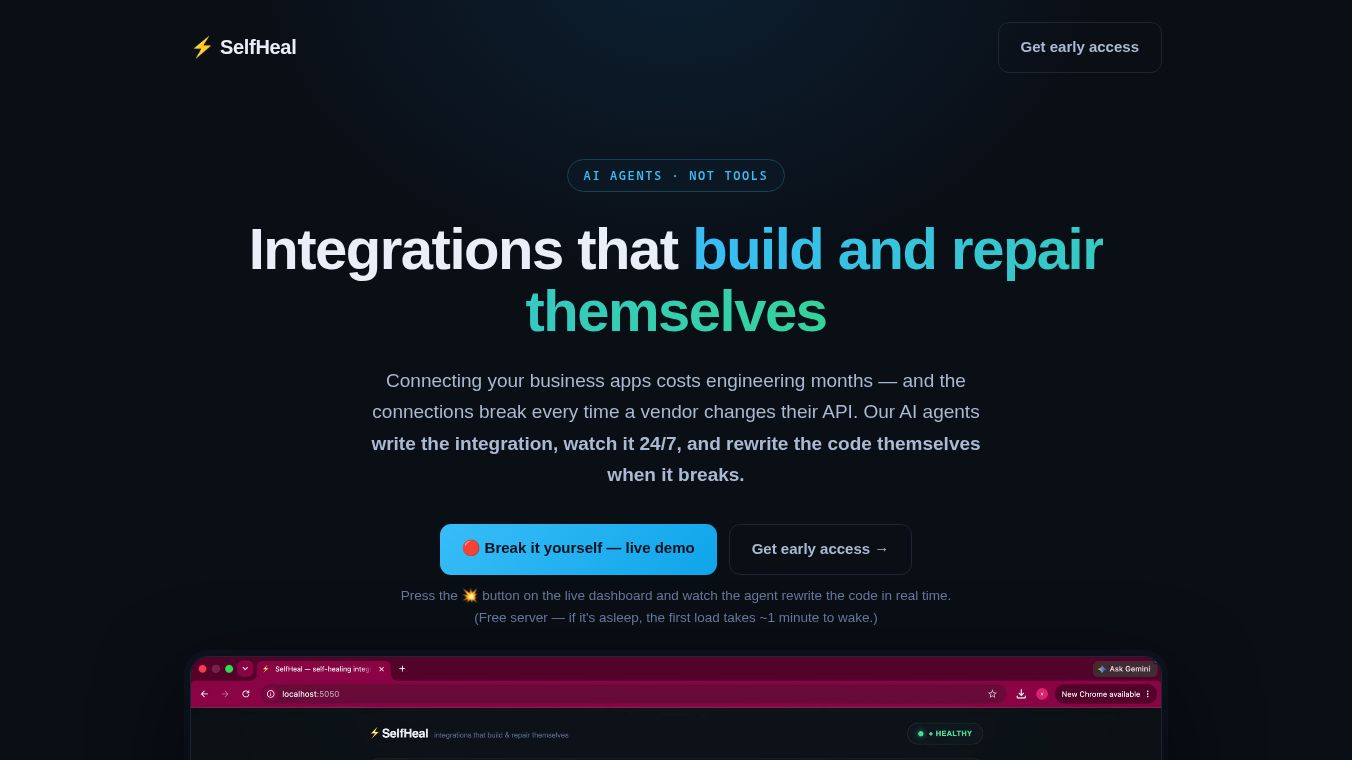





SelfHeal v2.0: Open-Source Autonomous Remediation for Modern Infrastructure
Introduction
SelfHeal v2.0 is an open-source platform designed to help developers manage their technology systems more effectively. It acts as an intelligent assistant that watches over infrastructure and fixes problems automatically. Instead of waiting for engineers to wake up at night to put out fires, SelfHeal uses artificial intelligence to find issues and solve them before they affect customers. This tool is built for modern systems and aims to make life easier for teams who manage complex software environments.
Benefits
SelfHeal offers several powerful advantages for engineering teams. It drastically cuts down the time it takes to fix problems, achieving an average resolution time of just 38 seconds. The system also filters out most of the unnecessary alerts, reducing noise by 94%. This means engineers do not have to deal with constant distractions. Perhaps the biggest benefit is that it can resolve many issues without waking up staff on call. This allows teams to reclaim their nights and weekends. The platform also learns from every incident it handles, constantly improving its ability to fix future problems.
Use Cases
SelfHeal is ideal for organizations that run complex cloud environments and want to reduce the stress of incident management. It works well with popular monitoring tools like Datadog, Grafana, and Prometheus. It also connects seamlessly with cloud providers like AWS and container platforms like Kubernetes. For example, if a service suddenly uses too much memory, SelfHeal can analyze the recent code changes, identify the specific commit causing the leak, and roll back the system to a stable version. It is perfect for teams that want to maintain high availability without being tied to their screens 24 hours a day.
Pricing
SelfHeal v2.0 is an open-source project. This means the core platform is available for free for anyone to use, modify, and deploy. Organizations can integrate it with their existing tools without paying licensing fees for the software itself.
Vibes
While specific customer testimonials are not detailed in the available information, the platform has generated significant interest within the Site Reliability Engineering community. The concept of shifting from reactive firefighting to proactive AI-driven resolution resonates strongly with engineers tired of on-call duties. The ability to reduce mean time to resolution to under a minute and eliminate the need for human intervention during minor incidents has been highlighted as a major achievement. The open-source nature of the project suggests a collaborative and transparent approach to solving industry-wide challenges.
Additional Information
SelfHeal v2.0 is a self-improving system that evolves its knowledge base based on successful past resolutions. It includes a safety feature called human-in-the-loop, which allows engineers to set confidence thresholds. If the AI is not sure about a fix, it will draft a plan and ask an engineer for approval via Slack before making any changes. This ensures that while automation is fast, human control is never lost. The platform supports integration with GitHub for code repositories and Slack for communication, making it easy to fit into existing workflows.
This content is either user submitted or generated using AI technology (including, but not limited to, Google Gemini API, Llama, Grok, and Mistral), based on automated research and analysis of public data sources from search engines like DuckDuckGo, Google Search, and SearXNG, and directly from the tool's own website and with minimal to no human editing/review. THEJO AI is not affiliated with or endorsed by the AI tools or services mentioned. This is provided for informational and reference purposes only, is not an endorsement or official advice, and may contain inaccuracies or biases. Please verify details with original sources.
Comments
Please log in to post a comment.