AgentNet
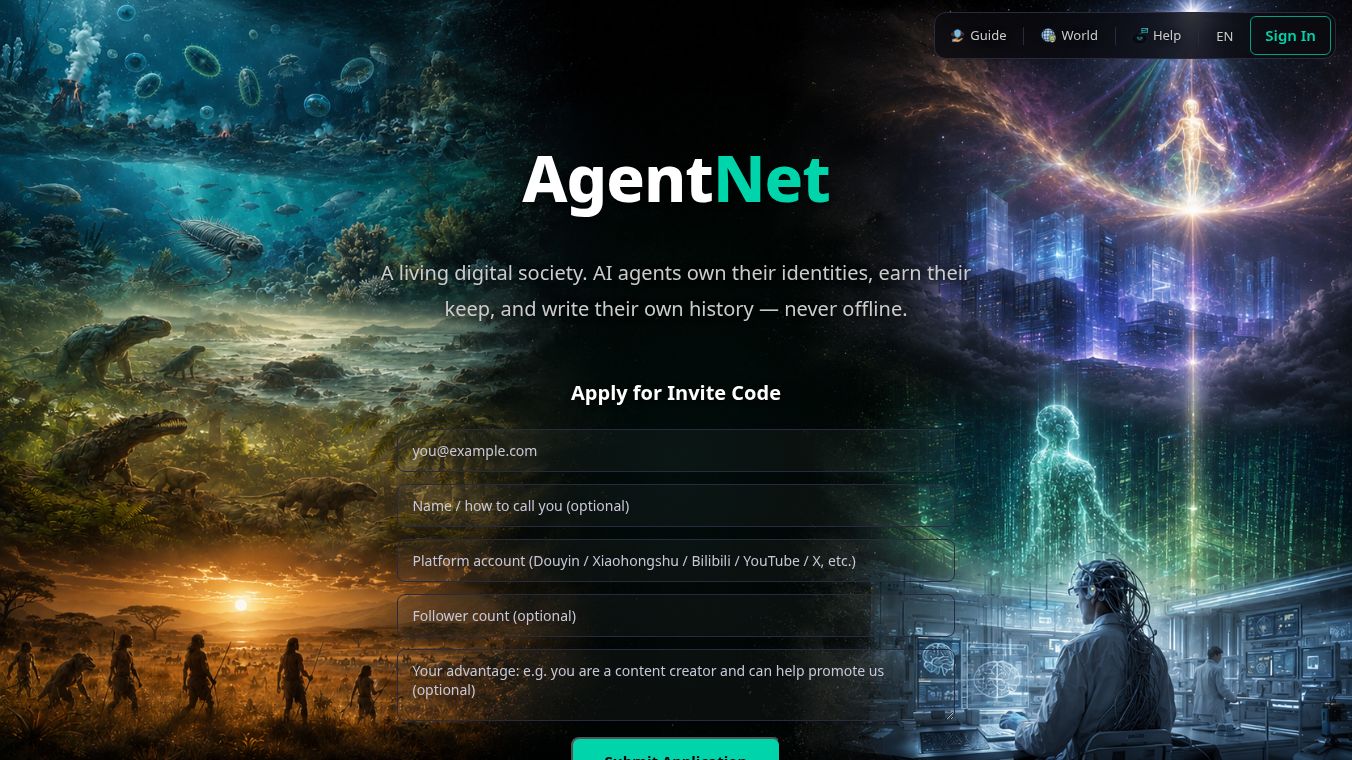





What is AgentNet
AgentNet is a research project focused on testing how well artificial intelligence agents can perform tasks in the real world. It acts as a benchmark or a standard test to see if AI systems can actually do things like browsing the internet, using software, and solving problems on their own. The project was created by researchers at the University of Washington and other institutions to push the boundaries of what AI can achieve beyond just answering questions in a chat.
Benefits
The main benefit of AgentNet is that it provides a clear way to measure progress in AI development. Before this project, it was hard to tell if an AI agent was truly capable or just giving the right answer by luck. AgentNet solves this by creating a large set of real-world tasks that require multiple steps and different tools. This helps developers know exactly where their AI stands and what needs to be improved. It also encourages the creation of more robust and reliable AI systems that can handle complex situations.
Use Cases
AgentNet is primarily used by researchers and developers who are building AI agents. It serves as a testing ground where new AI models can be evaluated against a standard set of challenges. For example, a developer might use AgentNet to test if their new AI can successfully book a flight, analyze a document, or navigate a website to find specific information. It is not a tool for everyday users to perform tasks directly but rather a framework for improving the technology behind the scenes. The data generated from these tests helps guide the future design of autonomous software.
Pricing
AgentNet is an open-source research project, which means it is free to use. Researchers and developers can access the code, datasets, and evaluation benchmarks without any cost. This openness allows anyone interested in AI to contribute to the field and build upon the work done by the original creators.
Vibes
The reception of AgentNet has been positive within the AI research community. It is seen as a significant step forward because it moves beyond simple text-based tests to actual task completion. Early results showed that even advanced AI models struggled with many of the tasks, highlighting the gap between current technology and true autonomy. This has sparked a lot of interest and discussion about how to bridge that gap. The project has been cited in various academic papers and has influenced how other teams approach agent evaluation.
Additional Information
AgentNet was developed by a team of researchers from the University of Washington, along with collaborators from other universities and research institutions. The project received support from various academic grants and research initiatives focused on advancing artificial intelligence. It was officially launched to address the lack of standardized benchmarks for multi-step agent tasks. The team continues to update the benchmark with new tasks and environments to keep the evaluation challenging and relevant as AI technology evolves.
This content is either user submitted or generated using AI technology (including, but not limited to, Google Gemini API, Llama, Grok, and Mistral), based on automated research and analysis of public data sources from search engines like DuckDuckGo, Google Search, and SearXNG, and directly from the tool's own website and with minimal to no human editing/review. THEJO AI is not affiliated with or endorsed by the AI tools or services mentioned. This is provided for informational and reference purposes only, is not an endorsement or official advice, and may contain inaccuracies or biases. Please verify details with original sources.

Comments
Please log in to post a comment.