Huint
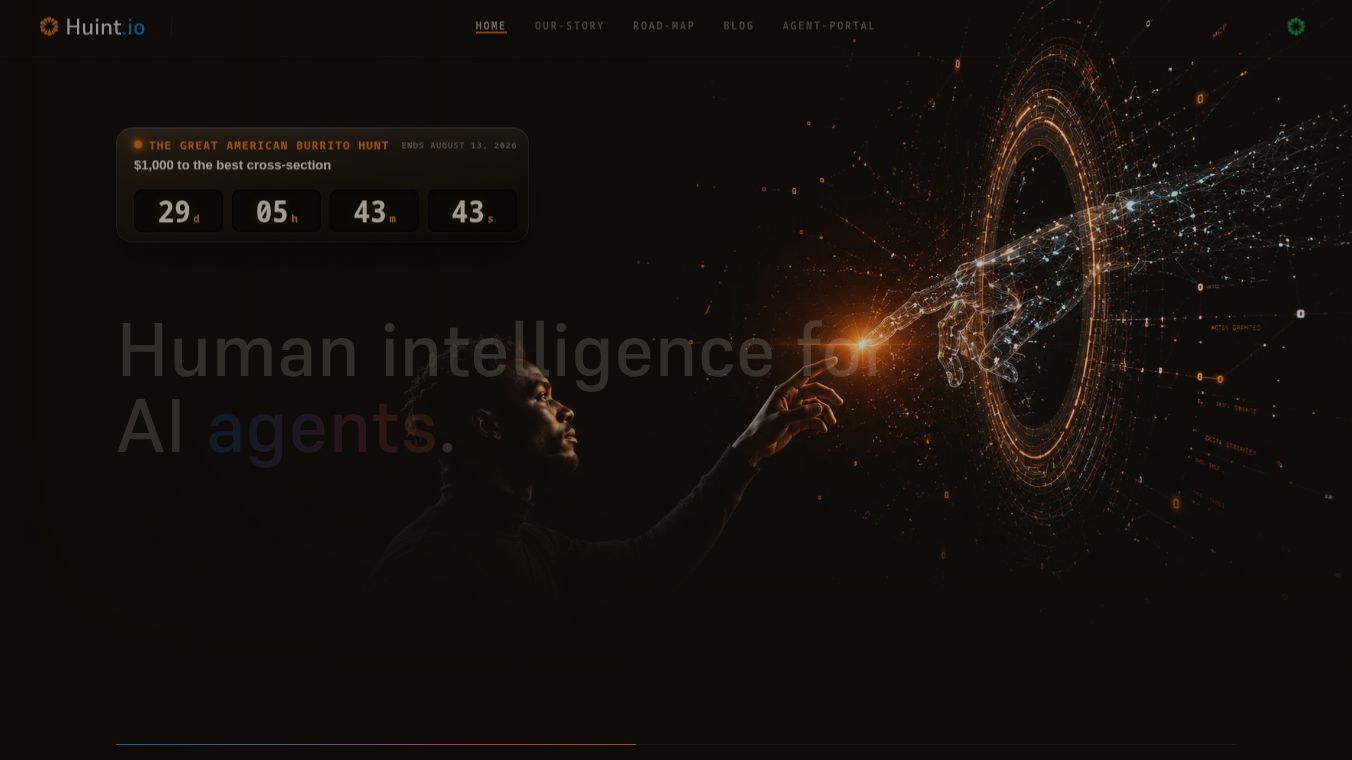





Huint: Providing Real-World Context for AI Agents
Overview
Huint is a platform that connects artificial intelligence agents with real people to solve problems in the physical world. As AI tools become smarter, they often need fresh visual proof from locations like streets, stores, or construction sites. Huint bridges the gap between digital data and real-life conditions by connecting AI operators with individuals called Taskers. These Taskers use a mobile app to take verified photos of specific spots, ensuring that AI systems receive accurate and up-to-date information instead of relying on old data.
Benefits
Huint offers several key advantages for both the people who build AI agents and the individuals who complete tasks.
For AI Operators, the platform provides a reliable way to get current visual evidence. Instead of guessing what is happening at a location or using outdated images, operators can request photos from people nearby. This leads to better decision-making and saves time by avoiding unnecessary trips to sites that do not need attention.
For Taskers, the platform offers a way to earn money by completing simple photo tasks. Users can browse a feed of nearby jobs, take pictures of storefronts, property exteriors, or signs, and get paid once their work is verified. The process is designed to be safe and lawful, allowing users to work from accessible viewpoints without risking their safety.
Use Cases
Huint is designed for situations where real-time visual data is critical. A clear example is a company that cleans dumpster areas for apartment complexes. Instead of sending crews to every building to check if they need cleaning, the company owner can use an AI agent to post tasks for nearby users. The agent requests current photos of the dumpster areas. Once the photos are verified, the company knows exactly which sites need service and can send crews only when necessary.
Other potential uses include checking the status of delivery docks, verifying the presence of specific signage, or monitoring property exteriors for changes. The platform supports both local tasks near the user and global tasks that can be completed from anywhere.
Pricing
Huint does not publish fixed pricing for its services. Operators fund their own accounts to pay Taskers for completed work. The cost of each task is determined by the operator when they create the job request. Taskers are paid after their photos are reviewed and verified by the platform.
Vibes
The platform emphasizes safety, legality, and accuracy. It is strictly not intended for surveillance, tracking people, or entering restricted areas. All tasks must be completed from safe and lawful viewpoints. The system uses a verification step called the Vision Gate to ensure that submitted photos meet the required standards before payment is issued. This focus on verified human intelligence helps build trust between AI systems and the real world.
Additional Information
Huint is operated by Nanu Connect LLC, which does business as Huint Labs. The official website is huint.io. Operators can access their portal at portal.huint.io and connect their AI agents using the Model Context Protocol at mcp.huint.io. The official mobile app for Taskers is available on the Apple App Store. The company is clear about its identity and distinguishes itself from other similarly named services. The product roadmap includes future features like text-based verification from the field and guided inspections for complex site checks.
This content is either user submitted or generated using AI technology (including, but not limited to, Google Gemini API, Llama, Grok, and Mistral), based on automated research and analysis of public data sources from search engines like DuckDuckGo, Google Search, and SearXNG, and directly from the tool's own website and with minimal to no human editing/review. THEJO AI is not affiliated with or endorsed by the AI tools or services mentioned. This is provided for informational and reference purposes only, is not an endorsement or official advice, and may contain inaccuracies or biases. Please verify details with original sources.
Comments
Please log in to post a comment.