VitaCodix





VitaCodix: The Future of AI-Assisted Medical and Dental Coding
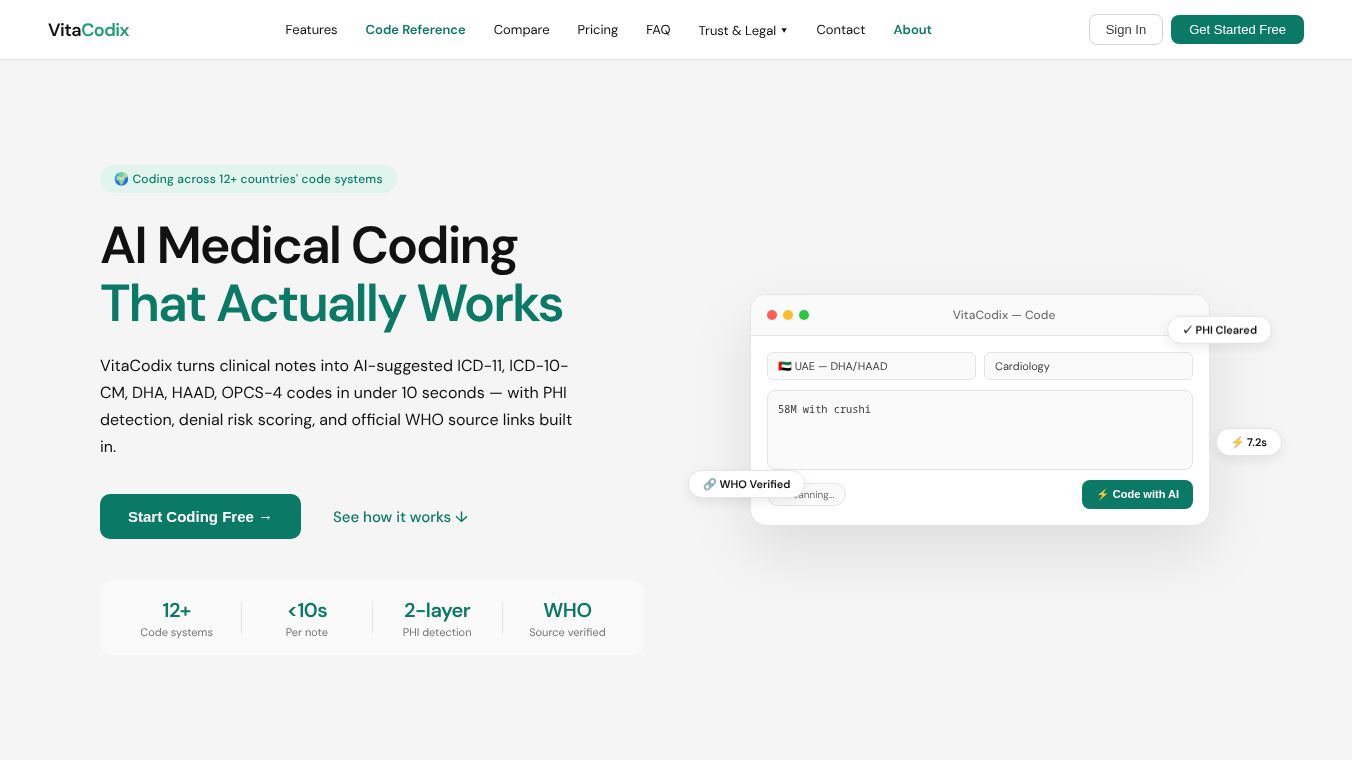
VitaCodix is a smart software tool designed to help healthcare professionals and medical coders turn patient notes into accurate billing codes. It uses artificial intelligence to process clinical information quickly and supports over 12 different international coding standards. This platform helps users reduce errors, lower the risk of claim denials, and speed up the billing process for doctors, coders, and administrators around the world.
Benefits
VitaCodix offers several key advantages for medical professionals who need to code patient records efficiently. The most significant benefit is its speed. The system can transform clinical notes into verified codes across multiple international systems in under 10 seconds. It supports a wide range of global standards including ICD-11 for the WHO, ICD-10-CM for the United States, and specific codes for the UK, Germany, France, Canada, India, Brazil, and the UAE. The tool also includes specialty-aware logic, meaning it understands the specific requirements for different medical fields like Cardiology, Orthopedics, and Psychiatry. This ensures higher accuracy for complex cases. Security is another major advantage. The platform uses a two-layer detection system to find and remove sensitive patient information before any data leaves the browser. It also flags AI-generated notes to prevent fraud. Finally, it helps with revenue recovery by providing denial risk scores and generating medical necessity narratives for insurance approvals.
Use Cases
VitaCodix is primarily used by licensed healthcare professionals and certified medical coders who need to bill insurance companies. It is useful for coders working in various specialties who need to apply the correct codes to patient notes quickly. For example, a cardiologist can use the tool to identify specific heart conditions and procedures based on clinical notes. It is also helpful for dental professionals who need to code procedures according to dental standards. The tool can be used to generate appeal letters when insurance claims are denied, saving time on paperwork. Users can input clinical notes directly into the platform, and the system will suggest codes with confidence scores. It is also designed to work with voice notes, allowing doctors to speak their notes and have them converted into text and codes automatically. A Chrome extension version is available for users who want to code directly within their browser or electronic medical record system without leaving the page.
Pricing
VitaCodix offers three different access levels to suit different needs. The Starter plan is free and includes 10 coding sessions per month. This version gives access to all code systems, PHI detection, and source links but does not include PDF export or analytics. The Professional plan is available for unlimited coding sessions. It includes two-layer PHI detection, PDF export with credential sign-off, an analytics dashboard, priority support, and API access. The Enterprise plan is a custom solution designed for hospitals and large teams. This option includes team management features, single sign-on capabilities, and dedicated account managers.
Vibes
Users who have tried VitaCodix generally appreciate its speed and accuracy. The platform is praised for its ability to handle complex medical notes and provide specialty-specific logic that feels like having a senior coder on staff. Many users value the security features, particularly the automatic removal of patient data and the detection of AI-generated notes. The denial risk scoring feature is often highlighted as a helpful tool for improving reimbursement rates. However, some users note that the tool is not yet fully HIPAA compliant, so they must ensure patient data is de-identified before use. Overall, the reception is positive among professionals looking for a reliable and fast coding assistant.
Additional Information
VitaCodix is built using Claude AI from Anthropic and incorporates country-specific prompting to reason through clinical notes effectively. The platform employs Microsoft Presidio NLP for identifying named entities and custom regex patterns for healthcare identifiers. It is important to note that VitaCodix is not a certified HIPAA-compliant platform, and users are responsible for ensuring notes are de-identified before submission. The tool is intended for professional use only by licensed healthcare professionals and certified coders. It is not for self-diagnosis or general public use. All outputs are suggestions and must be independently verified by a qualified human before billing or clinical use. The company accepts no liability for errors arising from AI-generated output. The platform is currently launching globally and is developing features for veterinary coding in the future.
This content is either user submitted or generated using AI technology (including, but not limited to, Google Gemini API, Llama, Grok, and Mistral), based on automated research and analysis of public data sources from search engines like DuckDuckGo, Google Search, and SearXNG, and directly from the tool's own website and with minimal to no human editing/review. THEJO AI is not affiliated with or endorsed by the AI tools or services mentioned. This is provided for informational and reference purposes only, is not an endorsement or official advice, and may contain inaccuracies or biases. Please verify details with original sources.
Comments
Please log in to post a comment.