Vibe Coding Bible: The Original
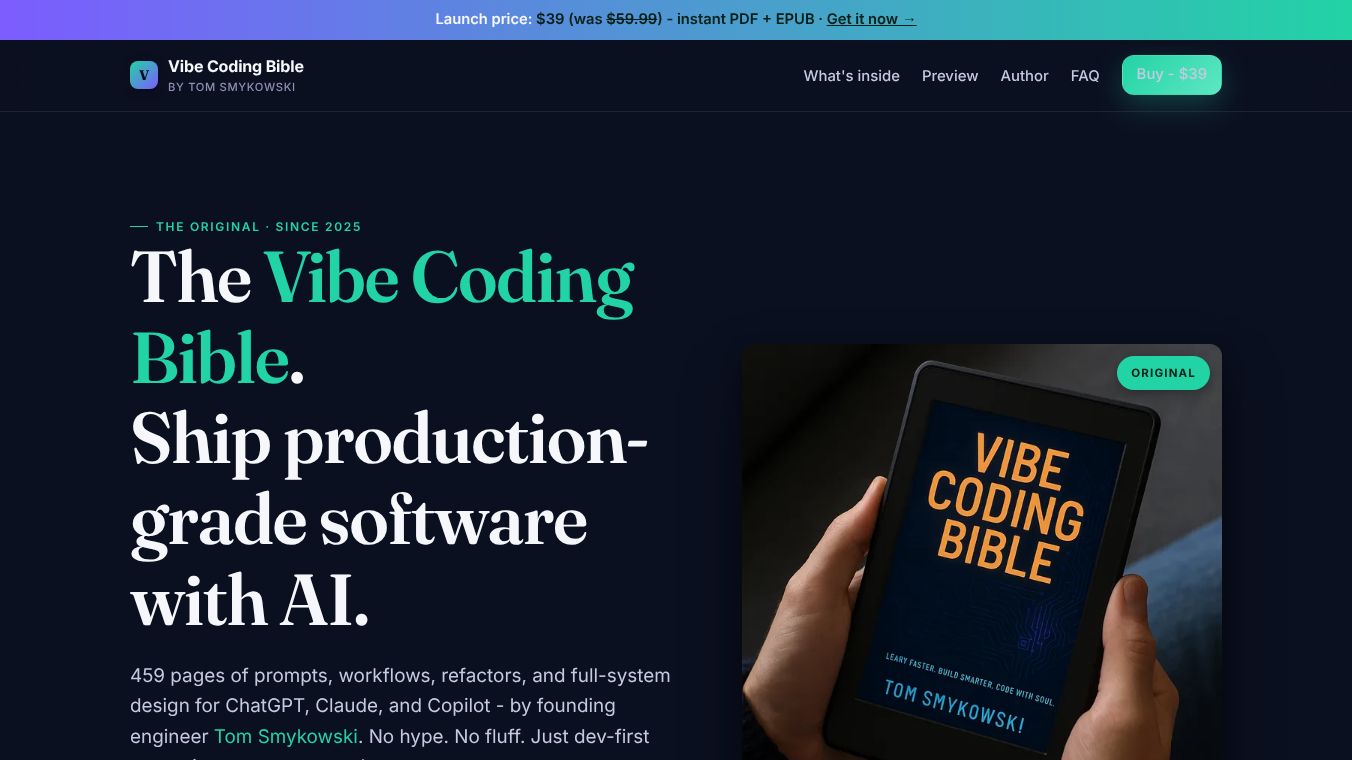





The Vibe Coding Bible is a complete guide to building software using artificial intelligence. It teaches developers, designers, and founders how to work with AI tools to create applications quickly. The book was named Collins Dictionary Word of the Year in 2025 for the term vibe coding. This term describes a new way of working where AI removes barriers to creation. Anyone can now build software at a level that once required a whole team. The guide focuses on three main ideas. You should code like a developer, design like an artist, and ship products like a founder. The book explains that code is like a recipe. The computer acts as the chef. You write the instructions and the computer follows them exactly. If you forget a step, the computer will wait or make mistakes. The guide notes that 41 percent of all code written globally is now generated by AI. It also mentions that 95 percent of codebases in the W25 batch from Y Combinator were created using AI. The book argues that AI writes fast but does not know your users or your specific standards. Therefore, you must act as the architect while the AI acts as the builder. You decide what to build and how it should work. The AI handles the actual implementation. This approach is compared to a film director deciding every shot while the AI acts as the camera operator. The guide outlines three laws for this new way of working. First, garbage in means garbage out. Vague prompts produce vague code. You must be specific with your requests. Second, trust but verify. AI confidently produces broken code. It predicts results but does not know the truth. You must always test the output. Third, iterate instead of regenerate. When code is not right, tell the AI specifically what is wrong. Do not start over from scratch. The book introduces a method called ARC for using the right tools at the right stage. The Architect phase uses Claude Code Opus 4.6 to draw blueprints for system design. The Refine phase uses Cursor to translate those decisions into production-quality user interfaces. The Construct and Review phase uses Codex 5.4 to run automated code reviews on every commit. This catches logic errors and security gaps. The guide also explains the importance of context files. These are markdown files in your project repository that give AI tools long-term memory. Every new AI session starts with zero memory of your project. Context files ensure the model always knows your stack and standards. The book lists three essential files. CLAUDE.md contains project rules and naming conventions. AGENTS.md defines permissions and workflows for agentic tools. GEMINI.md serves a similar purpose for Google's toolchain. These files travel with the git repository so switching tools does not reset your standards. The guide also discusses contract files to keep different tools aligned. APICONTRACT.md defines every endpoint and response shape. TYPESCONTRACT.md holds shared TypeScript types used on both sides of the stack. STATE_CONTRACT.md defines the global state shape and store structure. The workflow requires Claude Code to build the backend and write the contract. Cursor then reads the contract before building the frontend. Contract changes are the only source of truth for the system. The book covers prompt engineering as a foundation skill. The quality of AI-generated code depends entirely on how you ask questions. A great prompt has five parts. Context describes the situation. Task states what you want. Requirements list constraints. Format explains how the output should look. Examples show the pattern to follow. The guide suggests adding a creative latitude unlock to prompts. This phrase shifts the AI from simply executing specs to acting as a senior collaborator. It allows the AI to add functionality it thinks is necessary. The book lists seven principles to internalize for spotting problems instantly. Clarity is better than cleverness. Explicit instructions are better than implicit ones. Composition beats inheritance. Related code should stay together. Deletion is better than unnecessary abstraction. Performance should be the default setting. Accessibility must always be considered. The guide provides a structure for a scalable Next.js 16 application. It breaks down folders for routes, components, hooks, libraries, and types. It also explains naming conventions for components, variables, files, and constants. The book details how to manage different types of state. This includes URL state for sharing, server state for API data, form state for user input, and local UI state. Styling is covered with a convention for class order. It suggests using Tailwind classes for consistency. Performance tips include code splitting to let users load only what they need. The guide warns that a one-second delay can reduce conversions by 7 percent. Accessibility is emphasized by using semantic HTML elements instead of generic divs. This improves the experience for everyone and helps search engines. Error handling is explained as needing three states. Every async operation must handle loading, error, and success. The UI should show a skeleton while loading, an error with a retry option on failure, and an empty state when the list is valid but has no items. Security rules are provided. Tokens should never be stored in local storage. Instead, use httpOnly cookies. Manual review gates are required before production. These include verifying token storage, authorization, payments, error messages, and secrets. The book also covers SEO and Answer Engine Optimization best practices. In the age of AI search engines, optimizing for both is critical. Semantic HTML structure, heading hierarchy, and meta tags are essential. Structured data using JSON-LD helps search engines understand content. AEO-specific optimizations include answering questions directly in the first paragraph and using Q&A formats. Image optimization involves descriptive alt text and proper file names. Performance metrics like LCP and CLS matter. Mobile-first design ensures touch targets are large enough. Content quality must be comprehensive and updated regularly. Internal linking and proper robots.txt configuration guide crawlers. The guide includes case studies for different skill levels. A task manager case study shows how to define interfaces before building UI. A weather dashboard case study demonstrates creating a function to fetch data safely. An e-commerce page case study covers handling product variants and global cart state. The book also addresses vibe coding for designers. Designers are no longer just drawing rectangles. They are architects of the code. The guide explains that Figma is the promise and code is the delivery. Vibe coding provides the truck to deliver the UI yourself. Designers should set up their stack with Cursor and Claude Code. Context is king. Open the relevant file so the AI sees what you see. Speak design rather than code. Describe the outcome instead of writing loops. Iterate instead of regenerating. If a button is wrong, type specific instructions to fix it. The Figma Bridge using MCP connects design directly to code. Cursor and Claude Code can read frames and variables from Figma. Design systems should be provided to the AI to prevent guessing. Translating Auto Layout to code involves converting direction, gap, and fill properties. Motion and interaction should be described by physics. Troubleshooting visual bugs requires being specific about padding and alignment. The book covers shipping your vibe using captain tools. The terminal is like texting the chef directly. NPM is the grocery store for code. The build process is like packing a suitcase. The vault refers to Git and GitHub. Git acts as a time machine or save points. GitHub is where you upload the photo for the world to see. The workflow involves adding files, committing with a message, and pushing. Deployment is opening night. Localhost is rehearsal. The golden workflow is to push code to Vercel or Netlify. The biggest trap is environment variables. Your .env file sits on your laptop and does not go to GitHub. You must manually add keys to the Vercel or Netlify dashboard. A checklist ensures you run builds locally and check logs if it fails. Custom domains are bought and configured in the dashboard. The book warns about the Vibe Wall. This happens when complexity outruns the model's understanding. New changes work in isolation but break existing behavior. Warning signs include rebuilt components that already exist or AI hallucinating dependencies. The solution is to maintain strict contract files. Use the ARC method to ensure the Architect and Builder are aligned. Implement rigorous testing and code review before pushing to production. Keep context files up to date to prevent the AI from losing memory of the project's history. The conclusion states that vibe coding is not about replacing developers. It is about empowering them to build faster, better, and with more confidence. By mastering the ARC method and understanding AI limitations, you can ship quality code that feels effortless.
This content is either user submitted or generated using AI technology (including, but not limited to, Google Gemini API, Llama, Grok, and Mistral), based on automated research and analysis of public data sources from search engines like DuckDuckGo, Google Search, and SearXNG, and directly from the tool's own website and with minimal to no human editing/review. THEJO AI is not affiliated with or endorsed by the AI tools or services mentioned. This is provided for informational and reference purposes only, is not an endorsement or official advice, and may contain inaccuracies or biases. Please verify details with original sources.
Video Links


Other Interesting AI Tools
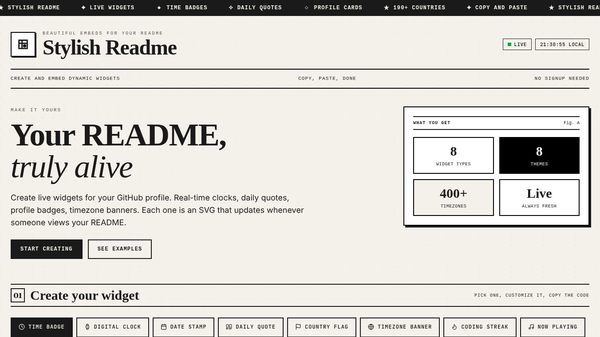
Stylish Readme
Comments
Please log in to post a comment.