Token Police
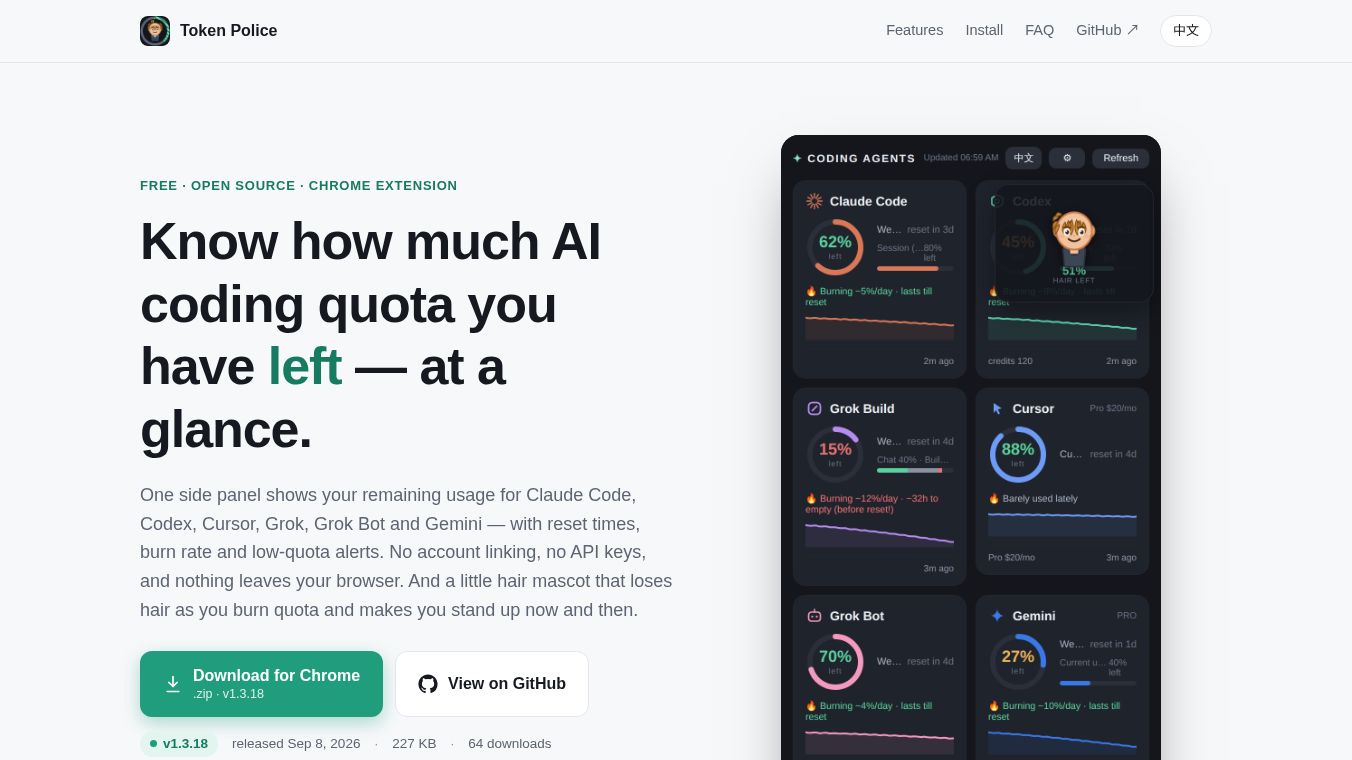





The Token Police: A Programmer's Guide to Min-Maxing AI Costs
Introduction
Token Police is a set of guidelines and protocols designed to help programmers reduce the cost of using AI coding assistants. It focuses on minimizing token usage, which is the unit of measurement for AI interactions and a key factor in pricing. The guide explains how developers can optimize their prompts and responses to save money without sacrificing quality. It also introduces a specific response style called "Desert Mode" that encourages brevity and efficiency in AI interactions.
Benefits
The main advantage of using Token Police is cost reduction. By following its rules, developers can significantly lower their AI usage bills. The guide also promotes a mindset shift where programmers view AI tools as investments in time rather than just expenses. This approach helps developers focus on building projects instead of worrying about minor costs. Additionally, the "Desert Mode" response style ensures that AI outputs are concise and direct, which can improve productivity by reducing the time spent reading long explanations.
Use Cases
Token Police is primarily used by independent developers and programmers who want to manage their AI spending. It can be applied in various scenarios, such as coding assistance, debugging, and project planning. Developers can implement the guidelines by adding specific instructions to configuration files like CLAUDE.md. This ensures that the AI follows the rules during every interaction. The protocol is especially useful for teams or individuals working with large context windows or high-volume AI usage.
Pricing
Token Police itself is a free resource and does not have a pricing model. However, it helps users optimize their spending on AI services like Claude Pro or Max. By reducing token usage, developers can potentially avoid upgrading to more expensive subscription tiers or save money on existing plans. The guide emphasizes that the cost savings come from efficient usage rather than purchasing additional features.
Vibes
The community response to Token Police reflects a mix of humor and practicality. Developers often share their experiences with token optimization, sometimes treating it as a competitive challenge. Some users find the strict rules amusing, while others appreciate the efficiency gains. The guide acknowledges that the obsession with token costs can border on the absurd, but it remains a popular topic among programmers. Many users report feeling more in control of their AI expenses after adopting these practices.
Additional Information
Token Police is part of a broader discussion on AI cost optimization in the developer community. It aligns with the concept of Conery's Law, which states that any conversation about AI coding assistants will eventually lead to token cost discussions. The guide does not have formal funding or partnerships but is widely shared in developer forums and online communities. It serves as a practical tool for programmers looking to balance efficiency with cost management in their AI workflows.
This content is either user submitted or generated using AI technology (including, but not limited to, Google Gemini API, Llama, Grok, and Mistral), based on automated research and analysis of public data sources from search engines like DuckDuckGo, Google Search, and SearXNG, and directly from the tool's own website and with minimal to no human editing/review. THEJO AI is not affiliated with or endorsed by the AI tools or services mentioned. This is provided for informational and reference purposes only, is not an endorsement or official advice, and may contain inaccuracies or biases. Please verify details with original sources.

Comments
Please log in to post a comment.