The Green List





Research context and background
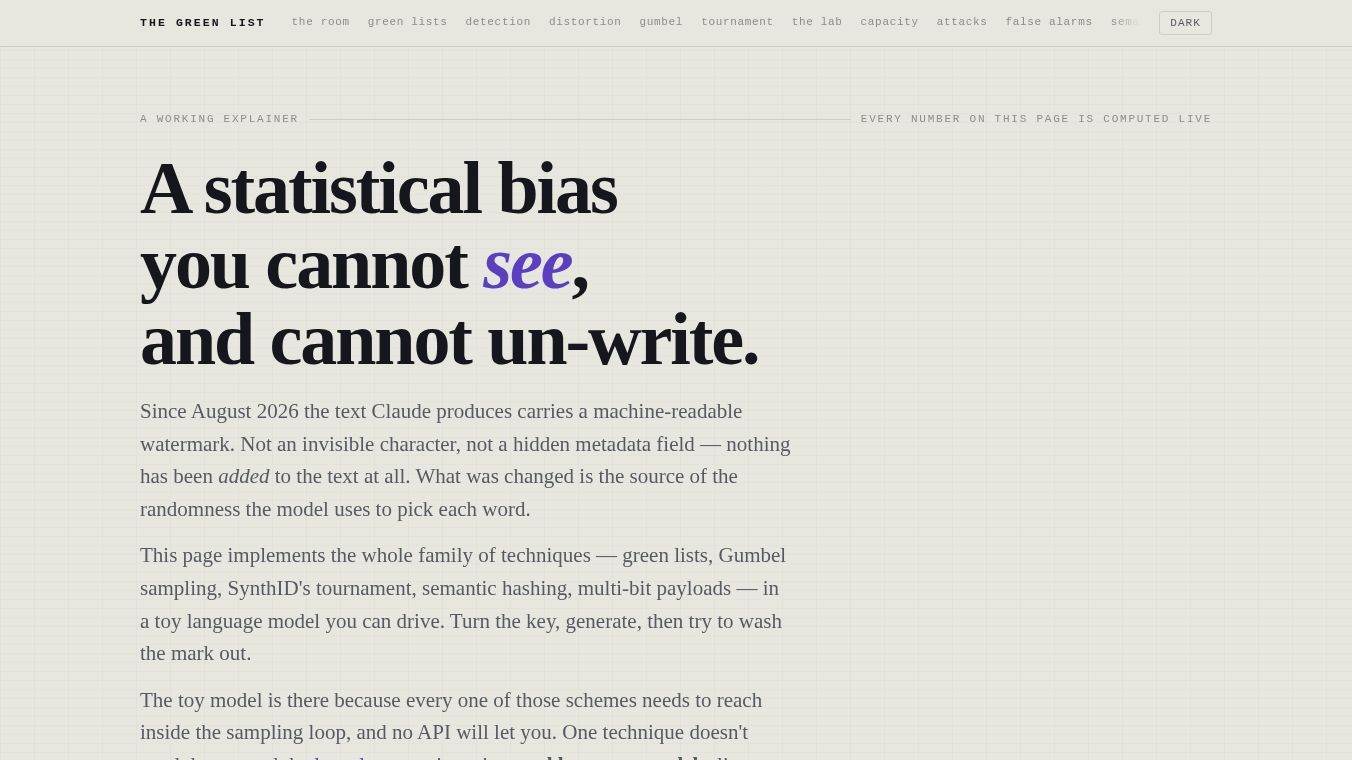
The Green List is a tool designed to help users identify which large language models have been watermarked. It serves as a guide for people who want to know if the text they are reading or generating comes from an AI system that uses a specific watermarking technique. The concept of watermarking in AI involves adding invisible markers to text so that the source can be traced. This tool simplifies that process by providing a clear list of models that support this feature.
Benefits
The main advantage of The Green List is transparency. It allows users to see exactly which models are using watermarks, which helps in verifying the origin of content. This is useful for researchers, writers, and anyone concerned about AI-generated text. By knowing which models are on the list, users can make more informed decisions about the tools they use. It also promotes trust between human creators and AI systems by making the technology behind them more visible.
Use Cases
This tool is helpful for several groups of people. Researchers studying AI safety and ethics can use it to track which models are adopting watermarking standards. Content creators who want to avoid accidental plagiarism or misattribution can check the list before using certain models. Journalists and fact-checkers might use it to verify if a piece of text was generated by a specific AI. Additionally, anyone interested in the future of AI regulation can use The Green List to stay updated on industry trends.
Pricing
No pricing information is available for The Green List as it appears to be a research project or open-source initiative rather than a commercial product.
Vibes
There are no public reviews or testimonials available for The Green List at this time. The project is relatively new and is primarily discussed in technical circles and academic discussions about AI watermarking.
Additional Information
The Green List is associated with a GitHub repository maintained by a developer known as aianytime. The project is part of a broader effort to explain AI watermarking techniques to the public. It does not have any known corporate partnerships or significant funding announcements. The initiative focuses on education and awareness rather than commercial gain.
This content is either user submitted or generated using AI technology (including, but not limited to, Google Gemini API, Llama, Grok, and Mistral), based on automated research and analysis of public data sources from search engines like DuckDuckGo, Google Search, and SearXNG, and directly from the tool's own website and with minimal to no human editing/review. THEJO AI is not affiliated with or endorsed by the AI tools or services mentioned. This is provided for informational and reference purposes only, is not an endorsement or official advice, and may contain inaccuracies or biases. Please verify details with original sources.



Comments
Please log in to post a comment.