Semagora
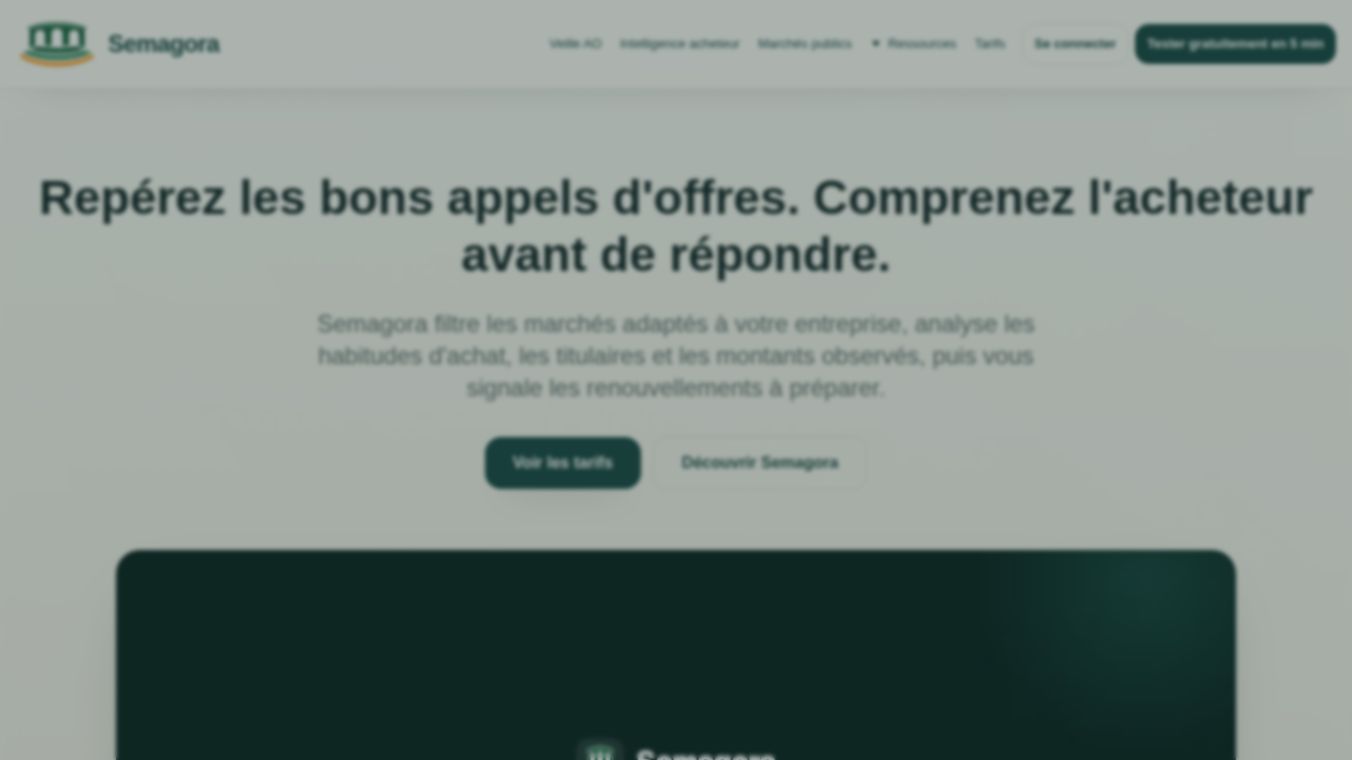





Semagora: Turning Public Tender Data into Smart Business Decisions
Introduction
Semagora is a digital tool designed to help businesses manage public government contracts more effectively. It acts as a central hub that collects information from many different sources to find the right opportunities for a company. Instead of just sending simple alerts based on keywords, Semagora uses smart analysis to understand what buyers actually need. This helps companies move from simply watching for news to making strategic decisions about which projects to pursue.
Benefits
Semagora offers several key advantages that save time and improve business outcomes.
- Smart Filtering: Unlike basic tools that only match exact words, Semagora understands the meaning behind a request. It matches the needs of a government buyer with a company's actual skills, even if the specific words used do not match perfectly.
- Buyer Insights: The tool provides deep data on government buyers. Users can see how much a buyer spends over three years, what types of contracts they usually buy, and which companies win them often.
- Accurate Pricing: Semagora shows historical spending amounts for similar projects. This helps companies create realistic price quotes before they even start writing a proposal.
- Early Preparation: The system predicts when contracts are likely to be renewed, usually six to twelve months in advance. This gives businesses enough time to prepare and organize their teams early.
- Time Savings: By centralizing data from official sites and public platforms, users do not need to search multiple websites manually. The routine becomes fast and clear.
Use Cases
Semagora is built for companies that want to win public sector contracts. It is useful in the following situations:
- Finding the Right Opportunities: A company can set up filters for their specific industry, location, and budget. The tool then highlights only the relevant tenders, ignoring irrelevant noise.
- Analyzing Competitors: Users can identify which companies have won contracts with a specific buyer in the past. This helps in understanding the competitive landscape.
- Planning for Renewals: If a company has a contract that is ending soon, Semagora alerts them to potential renewal opportunities so they can start working on the new proposal early.
- Document Management: The tool collects and organizes contract documents when available, making it easier to review past agreements and terms.
- Strategic Decision Making: Before deciding whether to bid on a project, a manager can look at the data to see if the project fits their capacity and if the buyer is a good match.
Pricing
Semagora offers a flexible subscription model with no long-term commitment. Users can cancel at any time, and their access remains active until the end of the paid period.
- Monthly Plan: Costs 79 euros per month.
- Annual Plan: Costs 57 euros per month when billed yearly. This option saves 264 euros per year compared to the monthly plan, offering a 28% discount.
Both plans include access to multi-source tender monitoring, semantic filtering, buyer history data, and email alerts for new opportunities. Users can start by creating a free account to see how well the tool matches their business profile before paying for the full subscription.
Vibes
While specific customer testimonials are not detailed in the available information, the tool is designed to solve a common pain point for businesses: the overwhelming amount of public tender data. By reducing the noise and focusing on actionable opportunities, it aims to reduce the number of irrelevant bids a company has to review. The focus on "buyer intelligence" suggests a professional approach that values data-driven decisions over guesswork.
Additional Information
Semagora aggregates data from official sources, public platforms, and aggregated sources to ensure a wide coverage of the market. The platform currently tracks over 23,000 active tenders and has indexed nearly 87,000 public notices over the last 12 months. It also recovers thousands of contract documents weekly. This extensive data collection allows the tool to provide a comprehensive view of the market by buyer, industry sector, or region.
This content is either user submitted or generated using AI technology (including, but not limited to, Google Gemini API, Llama, Grok, and Mistral), based on automated research and analysis of public data sources from search engines like DuckDuckGo, Google Search, and SearXNG, and directly from the tool's own website and with minimal to no human editing/review. THEJO AI is not affiliated with or endorsed by the AI tools or services mentioned. This is provided for informational and reference purposes only, is not an endorsement or official advice, and may contain inaccuracies or biases. Please verify details with original sources.
Comments
Please log in to post a comment.