Polygres
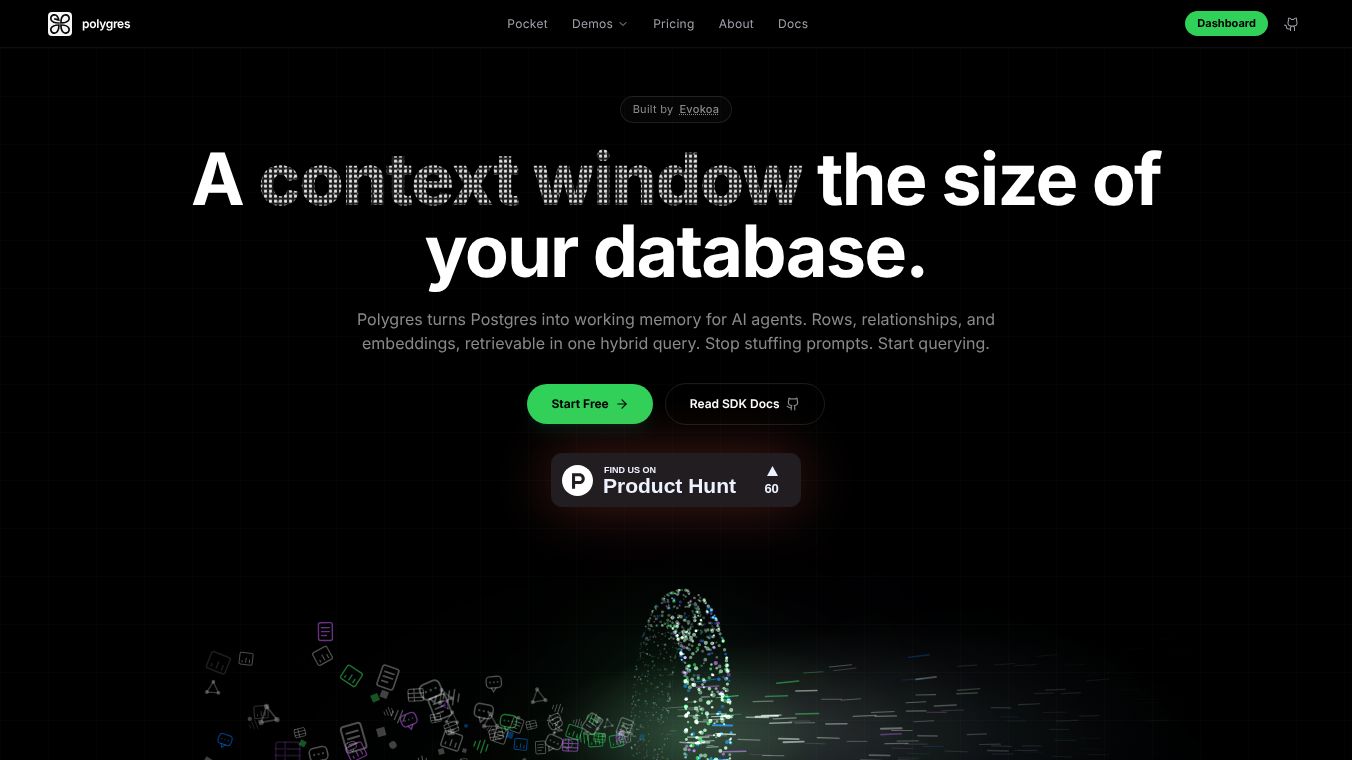





Polygres: A Context Window the Size of Your Database
Polygres is a tool that changes how artificial intelligence agents use data. It turns a standard Postgres database into a large working memory for AI. Instead of forcing users to write long and messy instructions to get information, Polygres lets them ask questions directly. The system combines different types of data searches into one fast result. This means AI agents can access rows, relationships, and vector data all at once without needing extra tools.
Benefits
Polygres offers several key advantages for developers and businesses. First, it removes the need to stuff complex details into AI prompts. Users can simply ask a question and get an answer. Second, it provides extremely fast search speeds. The tool uses graph technology to find connections between data points in milliseconds. Third, it unifies different data types. Users do not need separate systems for relational data, graph data, or vector data. Polygres joins all these types in a single query. Finally, it offers unbounded context. While AI models usually have a limit on how much text they can read, Polygres can access every row in the database. This ensures no important information is left out.
Use Cases
Polygres is designed for situations where AI needs deep access to structured data. One common use case is customer support. An AI agent can look up a specific order number and then automatically find related payment records and dispute history. This helps the agent understand the full story behind a customer issue. Another use case is internal business operations. Teams can ask questions about complex datasets without writing complicated code. For example, a manager could ask why a specific project failed, and the system would trace the connections between tasks, people, and timelines. It is also useful for any application that relies on Postgres as its main data source. Developers can integrate Polygres quickly using an open-source SDK or by deploying a managed instance.
Pricing
The provided article does not contain specific pricing details for Polygres. It mentions that users can choose between a managed instance or an open-source SDK, but it does not list costs or subscription plans.
Vibes
The article does not include specific user reviews, testimonials, or public reception data. The tone of the description is professional and highlights the technical capabilities of the tool.
Additional Information
The article does not provide information about funding, partnerships, or notable achievements for Polygres. It focuses on the product features and how to get started with the tool.
This content is either user submitted or generated using AI technology (including, but not limited to, Google Gemini API, Llama, Grok, and Mistral), based on automated research and analysis of public data sources from search engines like DuckDuckGo, Google Search, and SearXNG, and directly from the tool's own website and with minimal to no human editing/review. THEJO AI is not affiliated with or endorsed by the AI tools or services mentioned. This is provided for informational and reference purposes only, is not an endorsement or official advice, and may contain inaccuracies or biases. Please verify details with original sources.
Comments
Please log in to post a comment.