PixelDrivePro





Pixeldrive: The Variable-Data Image Press for the Internet
Introduction
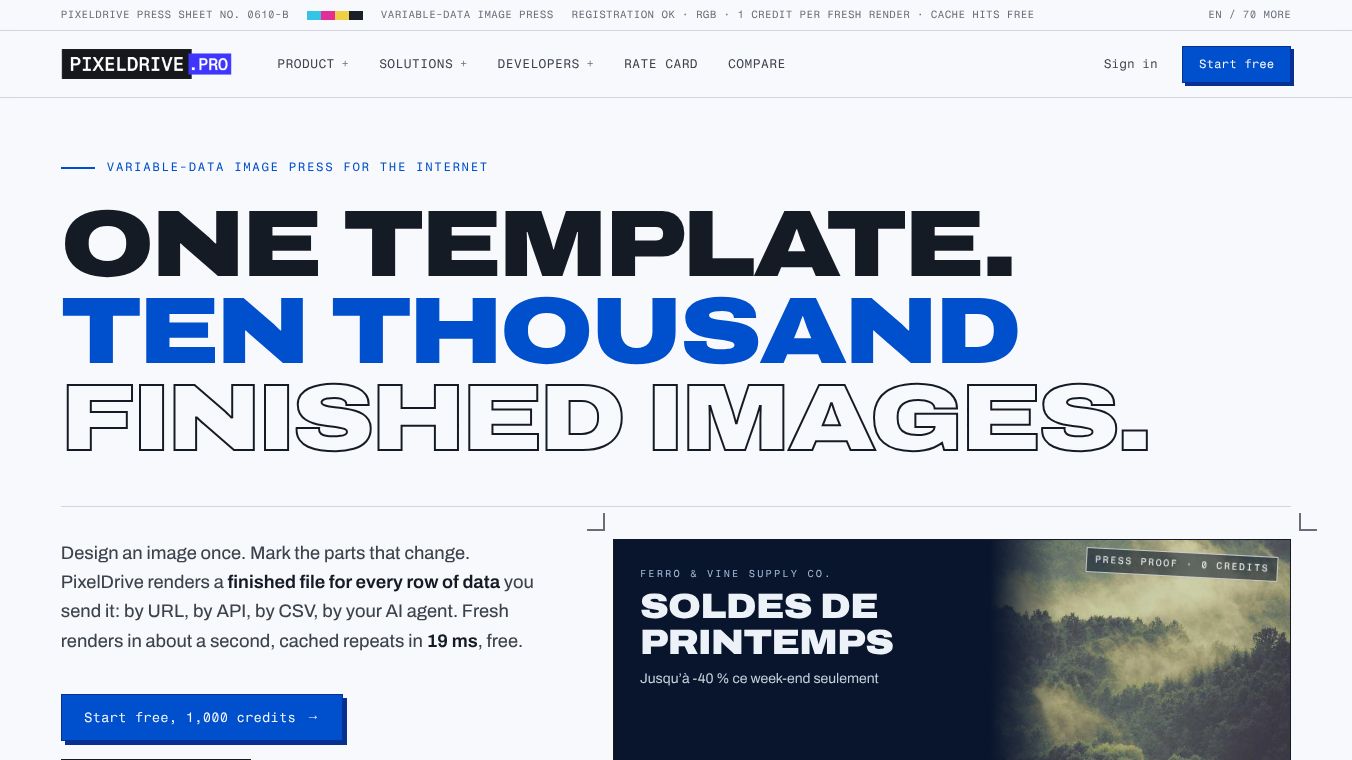
Pixeldrive is a powerful online tool designed to create thousands of unique images from a single design template. It works like a digital printing press for the web. Users create one master image and then mark specific parts as changeable. The system then instantly generates a new version of the image for every piece of data sent to it. This allows teams to produce personalized content at scale without needing complex coding or backend servers.
Benefits
Pixeldrive offers several key advantages that make it stand out from traditional image generation tools. First, it is incredibly cost efficient. A monthly plan that costs $29 can generate about 8,000 images. In comparison, typical image APIs might only produce 1,500 to 2,500 images for the same price. This is because Pixeldrive uses smart caching. If the system creates an image that is identical to one already made, it serves the stored file for free in about 19 milliseconds. Traditional services often charge for these repeated requests.
Second, the tool includes features that usually require extra vendors. It supports translation into 70 different languages directly within the platform. Users can simply add a language code to a link to change the text on the image. It also supports multiple file formats like PNG, JPEG, WebP, and PDF. The quality of these images can be adjusted from 1 to 100 based on the user's needs.
Third, Pixeldrive is built for automation. It supports data feeds from CSV files and webhooks. This means it can automatically process lists of data and generate images without human intervention. It also includes a hosted server for AI agents. This allows artificial intelligence tools to design layouts, search for stock photos, and mark variables directly within the Pixeldrive interface.
Use Cases
Pixeldrive is ideal for businesses that need to send personalized visual content to many people. For example, an e-commerce store can use it to create unique product cards for every customer. The system can change the product name, price, and customer name on each image automatically.
Marketing teams can use the tool to generate social media posts for different regions. By using the translation feature, they can create posts in Spanish, French, or German from a single English template. The system handles the text changes and ensures the images look correct in each language.
The tool is also great for generating reports or certificates. A company can upload a list of employee names and job titles. Pixeldrive will then create a unique certificate for each person. The system handles the numbering and naming of files automatically. It even streams the progress so users can see which files are being created and which ones might have failed.
Pricing
Pixeldrive uses a credit-based pricing model focused on efficiency. Fresh renders, which are new images created from scratch, cost 1 credit each. This process takes about 1 second. However, cache hits are completely free. If the system generates an image that matches a previous request, it is served instantly without any cost. Previews are also always free, allowing users to test their designs before paying for the final output. A standard monthly plan costs $29 and provides enough credits to generate approximately 8,000 images. This is significantly cheaper than typical image APIs that charge for every single request.
Vibes
Public reception for Pixeldrive highlights its unique approach to image generation. Users appreciate the ability to shift from manual exports to automated workflows. The platform eliminates the need for complex backend infrastructure, which is a major relief for development teams. Reviews often mention the speed of the service, with cached images serving in under 120 milliseconds. The inclusion of native components like QR codes and barcodes is also well received, as it removes the need for workarounds. The integration with AI agents is seen as a forward-thinking feature that streamlines the design process. Overall, the community views it as a streamlined path to scaling visual content creation.
Additional Information
Pixeldrive has achieved high reliability with an uptime of 99.97%. The platform stores images on an edge store, which means they are served from locations close to the user for faster loading. This makes the images suitable for hotlinking in emails or meta tags. The system includes a history feature that saves 30 restorable checkpoints for every template. This allows users to go back to previous versions of their design if needed. Security is handled through scoped API tokens that can have optional expiry dates and per-token rate limits. The platform also supports a hosted Model Context Protocol server with 26 tools, enabling deep integration with various AI clients.
This content is either user submitted or generated using AI technology (including, but not limited to, Google Gemini API, Llama, Grok, and Mistral), based on automated research and analysis of public data sources from search engines like DuckDuckGo, Google Search, and SearXNG, and directly from the tool's own website and with minimal to no human editing/review. THEJO AI is not affiliated with or endorsed by the AI tools or services mentioned. This is provided for informational and reference purposes only, is not an endorsement or official advice, and may contain inaccuracies or biases. Please verify details with original sources.
Other Interesting AI Tools






Comments
Please log in to post a comment.