PaaS dFrame
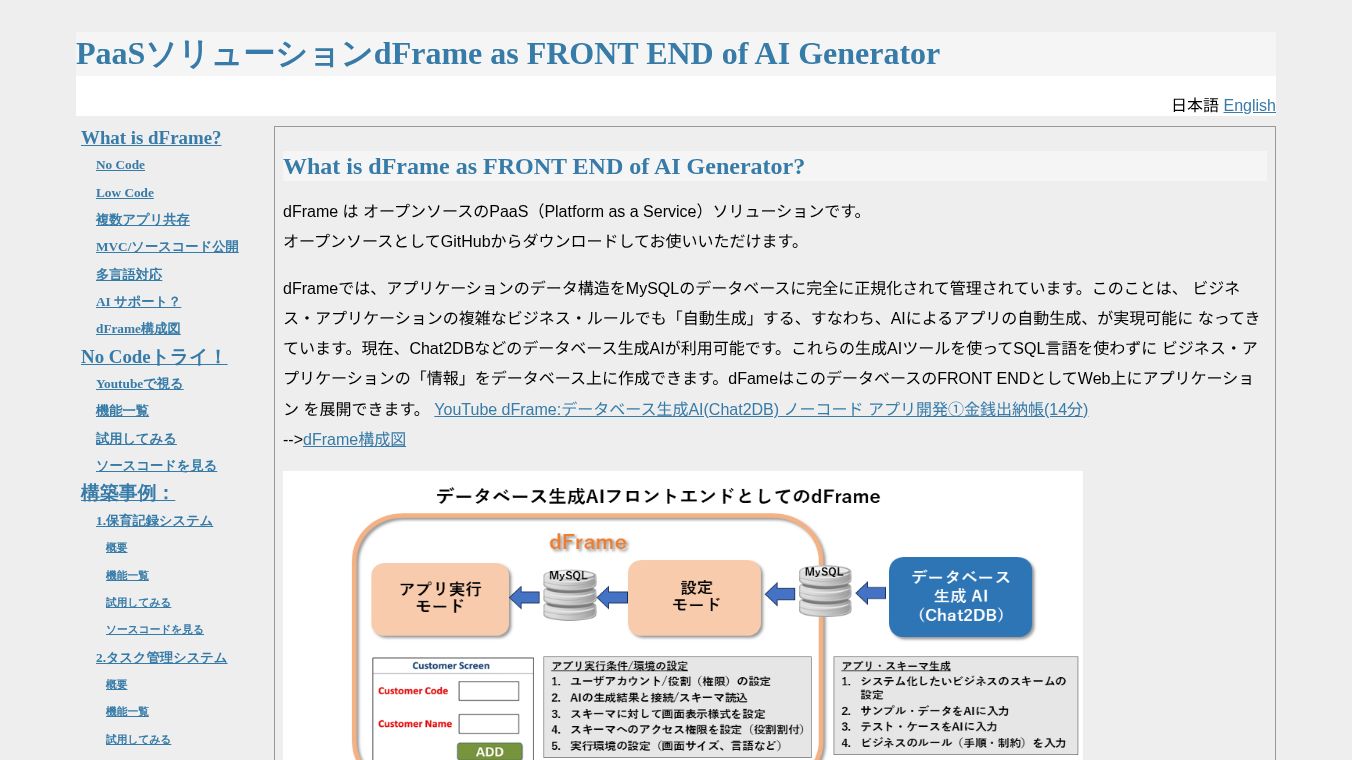





dFrame is an open-source tool that helps businesses build applications without writing complex code. It changes how software is made by focusing on database structures instead of traditional programming steps. This tool allows users to create business apps using simple design screens and SQL commands. It is designed to work with AI tools to automatically generate applications based on data relationships.
Benefits
The main advantage of dFrame is that it removes the need for procedural code. Users can create applications by defining how data relates to each other in a database. This approach makes it easier to maintain software because logic is stored inside the database as procedures and triggers. The system supports both no-code and low-code development. No-code users can build apps by filling out design screens, while low-code users can add small scripts for specific tasks. The architecture is built on a standard Model-View-Controller pattern which ensures the application is stable and easy to manage. It also supports multiple languages for the user interface, making it accessible to different teams.
Use Cases
This tool is useful for small to medium businesses that need custom software but lack large development teams. One example is a childcare management system. This app tracks student attendance, health records, and daily activities. It keeps all this information consistent across different records. Another example is an inventory management system. This app handles incoming goods, shipping details, and current stock levels. It helps companies track products from the factory to the warehouse. The system is also compatible with AI database generators, which means users can let AI help design the initial data structure before building the full application.
Pricing
Pricing information is not available for this product. It is an open-source solution available for download from GitHub.
Vibes
Public reviews or specific testimonials are not available in the provided information. The project relies on a community of volunteers from Japan and overseas to help improve the software. The developer, Hiroshi Sato, emphasizes that understanding data structure is more important than memorizing programming algorithms. This philosophy has attracted interest from those who want to build robust business applications without getting lost in complex coding details.
Additional Information
The project was created by Hiroshi Sato, a former engineer at Nihon Unisys and an independent system consultant. His goal is to make IT education focused on business structure rather than just programming algorithms. The source code is split into three parts. The model is a MySQL schema, the control logic is Python code, and the visual interface uses Python templates. The project currently has a backlog of tasks including security fixes and code improvements. It invites anyone with time and resources to contribute to the development of the tool.
This content is either user submitted or generated using AI technology (including, but not limited to, Google Gemini API, Llama, Grok, and Mistral), based on automated research and analysis of public data sources from search engines like DuckDuckGo, Google Search, and SearXNG, and directly from the tool's own website and with minimal to no human editing/review. THEJO AI is not affiliated with or endorsed by the AI tools or services mentioned. This is provided for informational and reference purposes only, is not an endorsement or official advice, and may contain inaccuracies or biases. Please verify details with original sources.



Comments
Please log in to post a comment.