Ousia
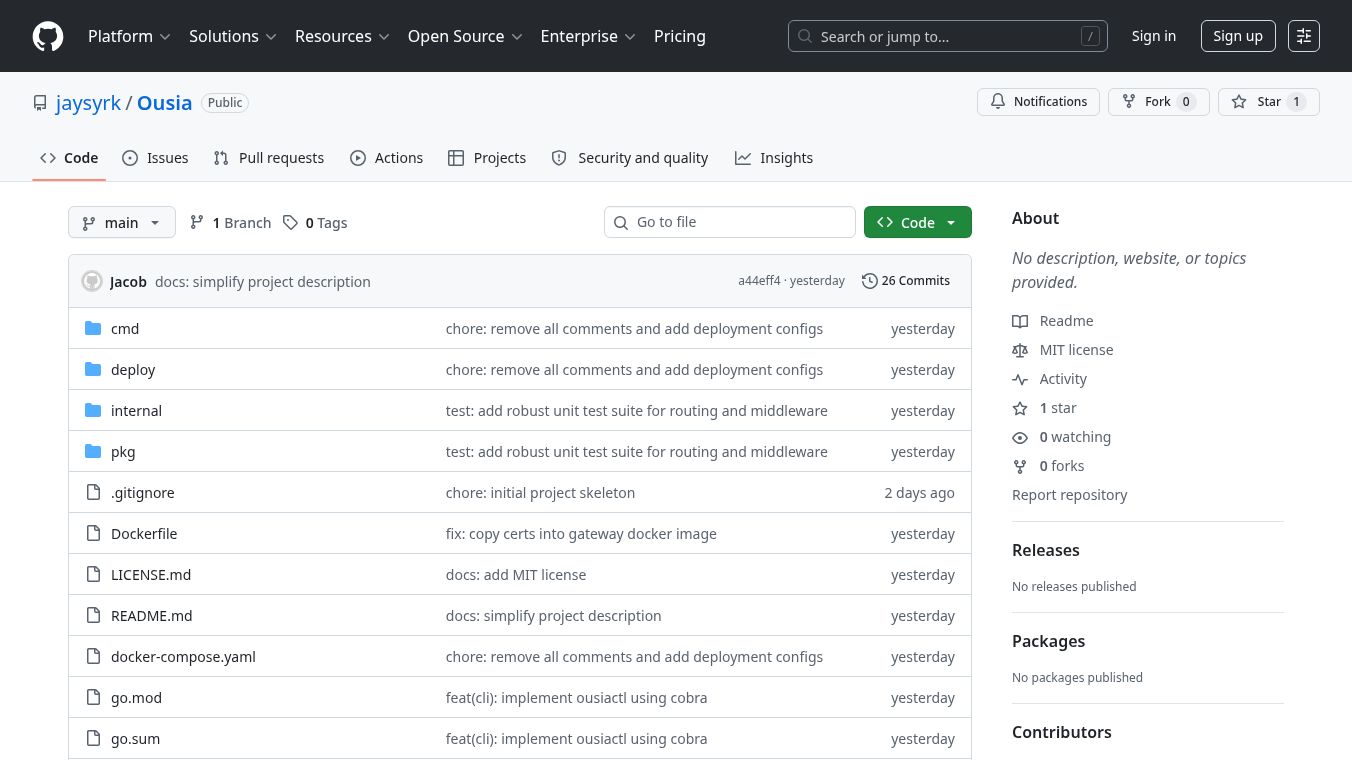





Ousia is a powerful software tool built in Go that acts as a smart traffic manager for small programs running on lightweight servers. It is designed to handle huge amounts of data traffic just like giant enterprise systems. The tool works by managing how data enters a system and how different services talk to each other using lightweight sidecar proxies. It uses advanced methods to balance loads and ensure the system stays available even when parts of it fail.
Benefits
Ousia offers several key advantages for developers and system administrators. It provides dynamic routing that directs traffic based on specific paths, prefixes, and HTTP methods. The tool supports multiple load balancing strategies such as round robin and weighted round robin to distribute work efficiently. Built-in resiliency features include circuit breakers, retries, rate limiting, and timeouts to keep services running smoothly during failures. It also includes native observability that automatically collects metrics and traces to help monitor system performance. A zero-friction command-line tool allows users to manage the entire cluster dynamically without complex setup.
Use Cases
This tool is ideal for small programs that need to scale to handle massive traffic loads. Developers can use it to manage inbound edge traffic for web applications or APIs. It is also useful for handling service-to-service communication within a microservices architecture. Teams can deploy transparent proxies to automatically manage service discovery and routing. The zero-dependency unit test suite makes it suitable for development and testing environments where reliability is critical. Organizations looking for a lightweight alternative to heavy enterprise service meshes will find this solution very practical.
Pricing
Pricing information is not available for this open-source project.
Vibes
There are no public reviews or testimonials available for this project.
Additional Information
Ousia is licensed under the MIT License. The project is hosted on GitHub at jaysyrk/ousia. It is built entirely in Go and includes a ready-to-run Docker Compose environment for quick local testing. The control plane and gateway look for a configuration file named ousia.yaml by default in the working directory. The project includes a robust unit test suite that covers the core router, load balancers, and middleware chain.
This content is either user submitted or generated using AI technology (including, but not limited to, Google Gemini API, Llama, Grok, and Mistral), based on automated research and analysis of public data sources from search engines like DuckDuckGo, Google Search, and SearXNG, and directly from the tool's own website and with minimal to no human editing/review. THEJO AI is not affiliated with or endorsed by the AI tools or services mentioned. This is provided for informational and reference purposes only, is not an endorsement or official advice, and may contain inaccuracies or biases. Please verify details with original sources.
 No Info



Comments
Please log in to post a comment.