Mentionry





What is Mentionry
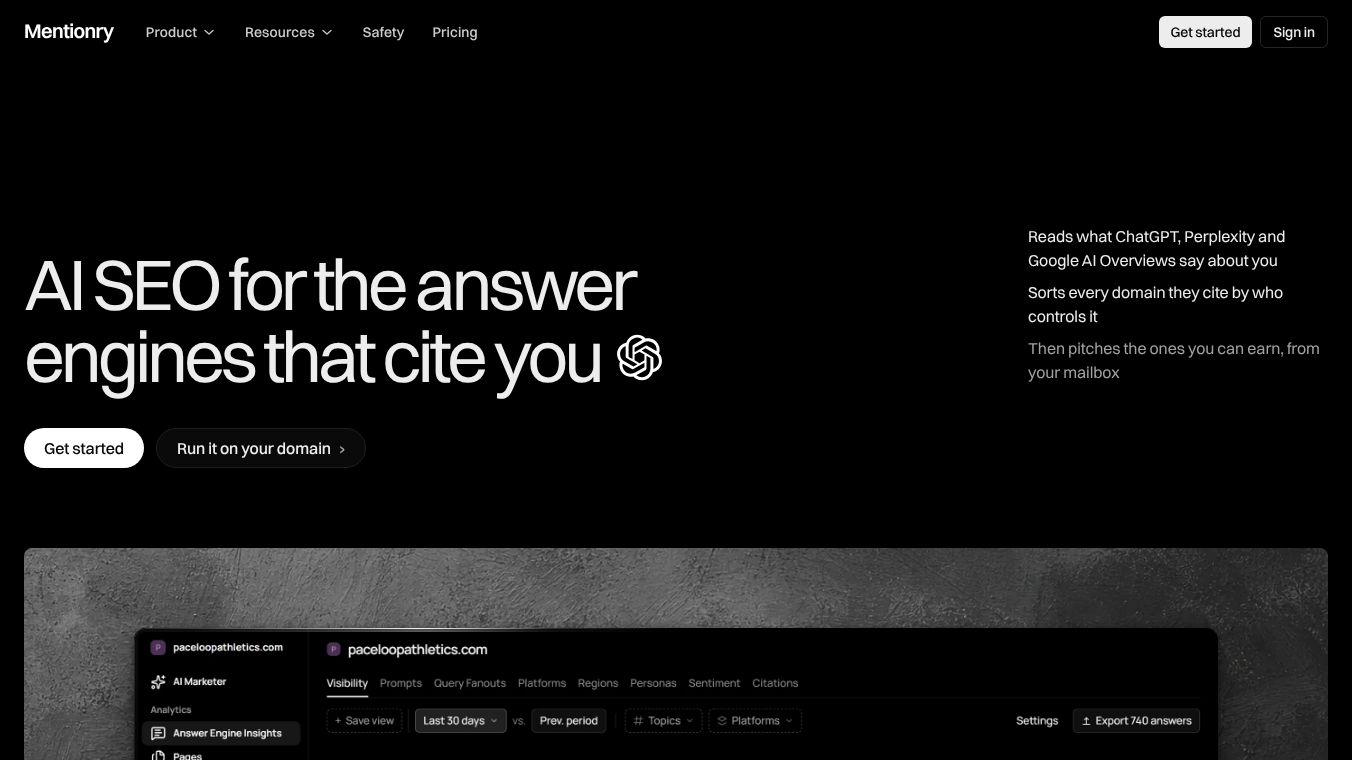
Mentionry is a strategic tool designed to help businesses get cited by AI answer engines. As search behavior changes, buyers now use AI systems like Microsoft Copilot, ChatGPT, Perplexity, and Google AI Overviews to find information. These tools do not just list websites; they read specific sources to build direct answers. Mentionry helps companies measure their current presence in these systems and execute a plan to earn new citations. By doing so, businesses ensure their brand appears when potential customers ask questions to AI.
Benefits
The main advantage of using Mentionry is the ability to track visibility in a new digital landscape. Traditional SEO focuses on ranking on search engine results pages, but AI answer engines work differently. They select information from a limited set of authoritative sources. Mentionry helps users understand which of these sources they are currently appearing in and which ones they are missing.
Another key benefit is the focus on earned media. The tool guides users to target independent publications and third-party sites rather than just their own website. Getting mentioned by a trusted news outlet or industry site carries more weight with AI systems. This approach builds credibility and ensures that the information AI engines pull is from a reliable source.
The platform also provides a clear method for outreach. It helps businesses identify journalists and editors who have already covered their industry. Users can then send personalized pitches from their own email addresses. This direct communication style feels more authentic and increases the chances of a journalist including the business in a new article that AI engines will read.
Use Cases
Mentionry is useful for any business that wants to be found by AI. Companies in competitive markets can use it to stay ahead of competitors who are already visible in AI answers. Marketing teams can use the tool to audit their current strategy and see if their content is being read by these new systems.
Startups and small businesses can leverage the platform to build authority quickly. By securing mentions in reputable publications, they can gain trust with buyers who rely on AI for research. The tool is also valuable for brands that have suffered from reduced visibility due to algorithm changes. It offers a proactive way to regain attention by focusing on high-quality, third-party citations.
Professionals who manage public relations or content strategy can use Mentionry to refine their outreach efforts. Instead of sending generic press releases, they can use the insights from the tool to craft targeted messages to specific journalists. This leads to better results and more meaningful coverage that lasts longer in the AI ecosystem.
Pricing
Pricing details for Mentionry are not available in the provided information. The tool appears to be a specialized service for advanced SEO and AI visibility strategies, but specific costs or subscription tiers have not been disclosed.
Vibes
Public reception and specific reviews for Mentionry are not included in the source material. The article focuses on the methodology and strategy behind earning AI citations rather than user testimonials or market feedback. However, the approach described aligns with a growing trend of businesses seeking to adapt to the rise of AI in search.
Additional Information
The strategy promoted by the concept behind Mentionry involves a rigorous measurement process. Users are advised to submit 100 specific questions to each major AI platform to establish a baseline. This large sample size helps ensure that the results are statistically significant and not just a one-time anomaly.
The tool emphasizes transparency in its data. Every citation reported is verified by checking that the source page is real and reachable. This prevents the use of fabricated metrics and ensures that businesses are tracking genuine visibility.
The core of the strategy relies on the three bands of sources: owned, operated, and earned. Mentionry helps users focus on the earned band, which consists of independent publications. This distinction is crucial because AI engines prioritize content from these external, authoritative sources over content that a company controls directly.
The outreach process highlighted involves sending pitches from a personal email address rather than a generic company domain. This practice helps maintain control over the conversation and makes the interaction feel more personal to the journalist. By providing journalists with new data or insights that answer a specific question, businesses increase the likelihood of being cited in future articles.
This content is either user submitted or generated using AI technology (including, but not limited to, Google Gemini API, Llama, Grok, and Mistral), based on automated research and analysis of public data sources from search engines like DuckDuckGo, Google Search, and SearXNG, and directly from the tool's own website and with minimal to no human editing/review. THEJO AI is not affiliated with or endorsed by the AI tools or services mentioned. This is provided for informational and reference purposes only, is not an endorsement or official advice, and may contain inaccuracies or biases. Please verify details with original sources.
Comments
Please log in to post a comment.