LexCat
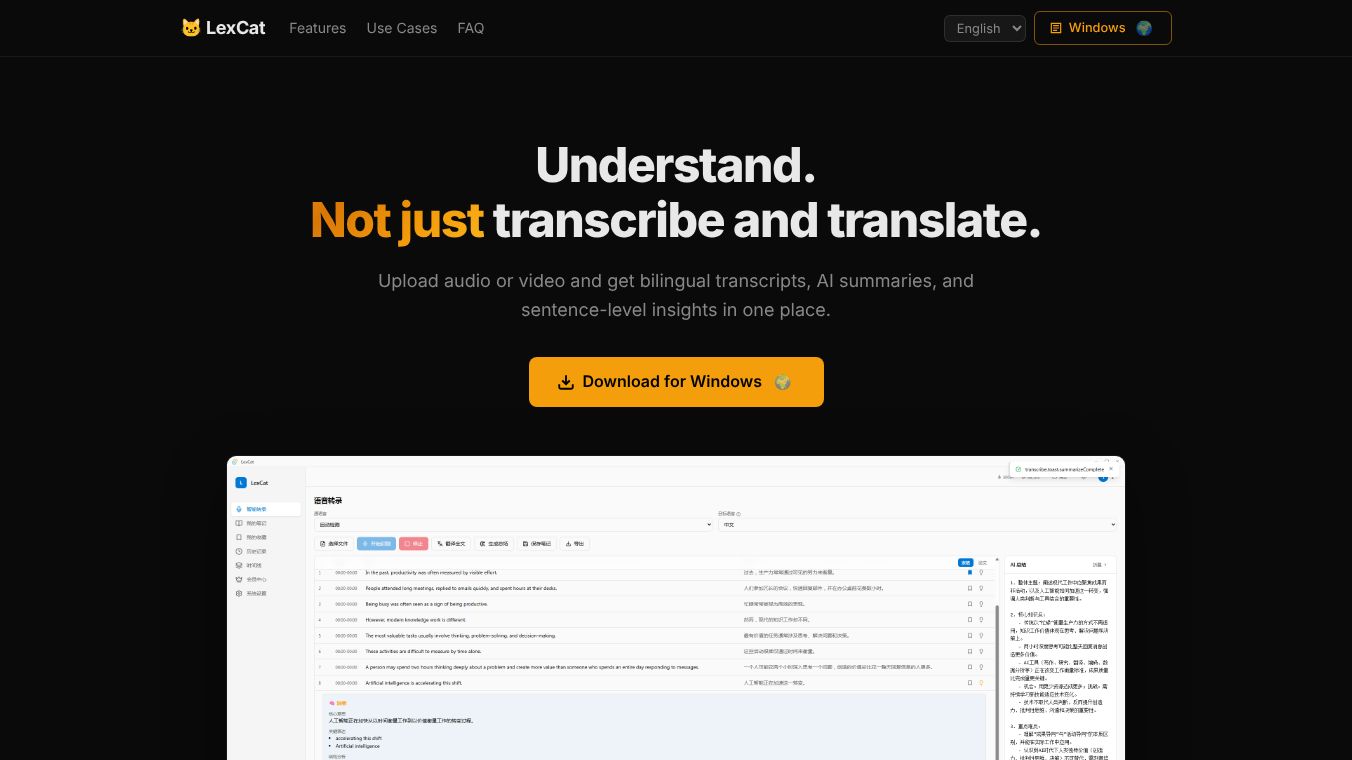





LexCAT: A Smart Tool for Understanding Taglish Sentiments
Research Context and Background
LexCAT is a specialized computer program designed to analyze the feelings and opinions expressed in Taglish, which is a mix of Tagalog and English commonly spoken in the Philippines. Traditional tools often struggle with this type of text because they expect sentences to be in just one language. LexCAT was created by Glenn Marcus D. Cinco from Mapua University as part of his computer science thesis. It uses advanced artificial intelligence technology to understand how people feel when they switch between languages within the same sentence.
Benefits
LexCAT offers several key advantages for anyone working with Filipino social media data or customer feedback. First, it is highly accurate. It achieved an accuracy rate of 84.31 percent when tested on real-world data, which is much better than older methods that only understood one language. Second, it handles tricky situations well. Many people say things like "It is good but expensive." Older tools might get confused by this mix of positive and negative words. LexCAT correctly identifies the overall feeling as negative because of the word "but." Third, it is built on a strong foundation. It uses a large pre-trained model called XLM-RoBERTa, which gives it a deep understanding of language patterns. Finally, it is easy for researchers to use. The tool is available on Hugging Face, a popular platform for sharing AI models, so developers can quickly add it to their own projects.
Use Cases
LexCAT is perfect for businesses and researchers who need to understand public opinion in the Philippines. One major use case is for social media monitoring. Companies can use it to scan comments on Facebook or Twitter to see if customers are happy or upset with a new product. Another use case is for analyzing online reviews. E-commerce sites often receive reviews in Taglish, and LexCAT can automatically sort these into positive, negative, or neutral categories. It is also useful for academic research. Students and scholars studying the Filipino language or digital communication can use LexCAT to analyze large datasets of text without needing to read every single comment manually. The tool works best for short texts like tweets, comments, and short product reviews.
Pricing
LexCAT is currently available as an open-source model on Hugging Face. This means that researchers, students, and developers can download and use it for free. There are no subscription fees or hidden costs to access the base model. Users can integrate it into their own software projects without paying for a license. The only requirement is that users have a basic understanding of how to run Python code, as the tool is designed for technical users who can load the model and run it on their own computers or servers.
Vibes
The reception for LexCAT has been positive within the academic and technical community. The model has already been downloaded 36 times in the last month, showing that people are interested in using it. There is one active project on Hugging Face that demonstrates how to use the model, which helps other developers learn how to apply it. While there are no public customer testimonials yet since the tool is new, the high accuracy scores reported by its creator suggest it is a reliable choice for sentiment analysis tasks. The creator, Glenn Marcus D. Cinco, has shared the model openly, which has helped build trust in its capabilities among Filipino tech enthusiasts.
Additional Information
LexCAT was developed as a Master of Science thesis in July 2025 at Mapua University. The project was a collaboration between the student and his research group, known as GMCTech. The model is built using 0.3 billion parameters and runs on standard floating-point 32-bit numbers. It includes a unique feature called LexiLiksik, which is a special dictionary of Taglish words and their associated feelings. This dictionary helps the AI understand the nuances of the language better than standard models. The code and documentation are available for anyone to study and improve upon, fostering a spirit of open innovation in the field of natural language processing.
This content is either user submitted or generated using AI technology (including, but not limited to, Google Gemini API, Llama, Grok, and Mistral), based on automated research and analysis of public data sources from search engines like DuckDuckGo, Google Search, and SearXNG, and directly from the tool's own website and with minimal to no human editing/review. THEJO AI is not affiliated with or endorsed by the AI tools or services mentioned. This is provided for informational and reference purposes only, is not an endorsement or official advice, and may contain inaccuracies or biases. Please verify details with original sources.
 No Info

Comments
Please log in to post a comment.