LangChain Explained
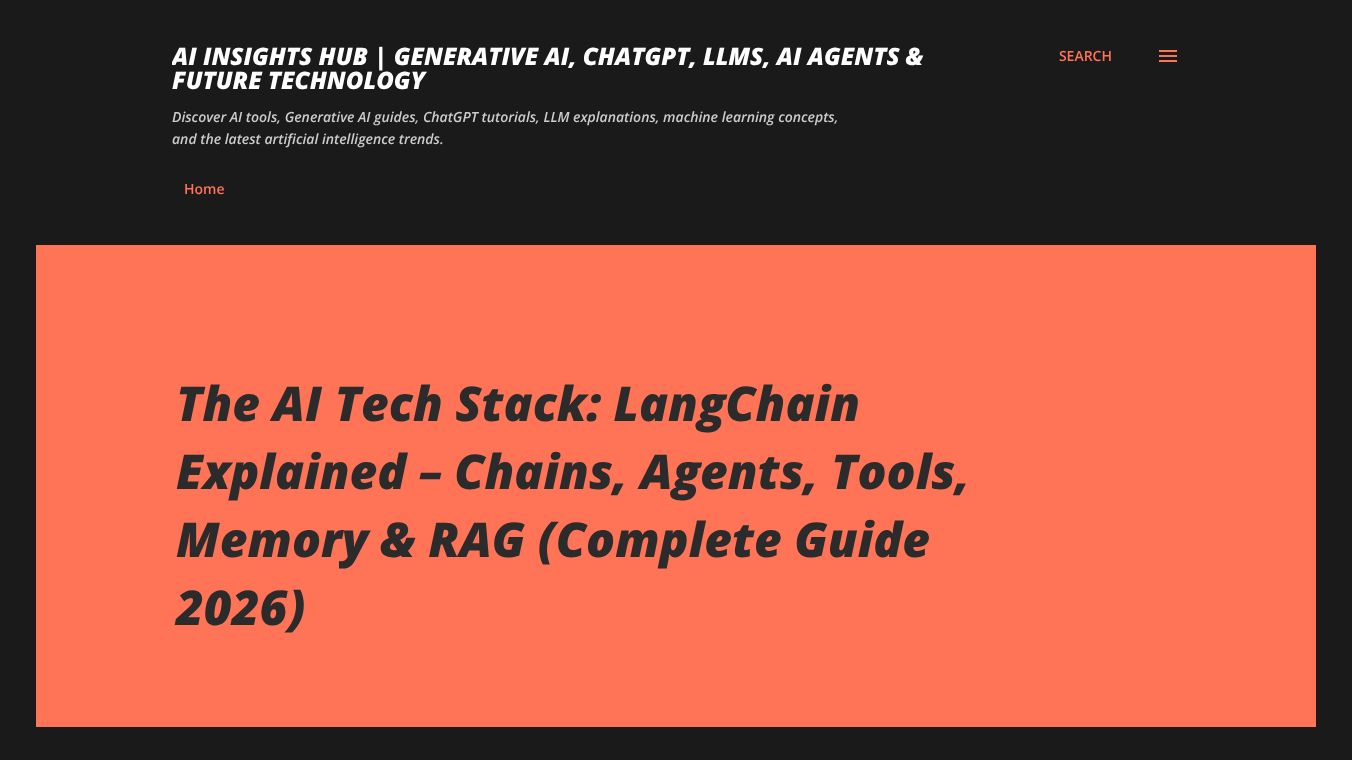





What is LangChain Explained
LangChain is a framework designed to help developers build applications powered by large language models. It acts as a bridge between these powerful AI models and the outside world. Instead of just generating text, LangChain allows software to connect to databases, search engines, and other tools. This makes it possible to create complex systems that can reason, plan, and interact with real data. The framework simplifies the process of chaining together different components to solve specific problems.
Benefits
One of the main advantages of LangChain is its ability to make AI applications more useful. By connecting models to external data sources, developers can create tools that answer questions based on specific documents or perform tasks like summarizing long reports. It also provides pre-built components that save time and reduce the need to write code from scratch. This modular approach means teams can mix and match different pieces to fit their unique needs. Additionally, LangChain supports various types of memory, allowing applications to remember past interactions and maintain context over time.
Use Cases
LangChain is used in many different areas where AI needs to interact with real-world data. In customer service, it powers chatbots that can search through company knowledge bases to find accurate answers. Developers use it to build research assistants that can read through academic papers and summarize key findings. It is also common in data analysis tools where users can ask questions about their datasets in plain language. Beyond these examples, LangChain helps in creating automated workflows that combine multiple steps, such as gathering information, analyzing it, and then generating a final report.
Pricing
LangChain is an open-source project, which means the core framework is free to use. Developers can download and install it without paying a license fee. However, the cost of using LangChain often depends on the large language models and other services it connects to. These external services may have their own pricing structures, so the total cost varies based on how the tool is deployed and scaled.
Vibes
The community surrounding LangChain is very active and supportive. Many developers praise its flexibility and the vast number of integrations available. Users often highlight how it lowers the barrier to entry for building sophisticated AI applications. While some note that the learning curve can be steep for beginners due to the complexity of the ecosystem, most agree that the resources and documentation available make it manageable. Overall, the reception is positive, with many seeing it as a standard tool in the modern AI development stack.
Additional Information
LangChain was founded by Harrison Chase and has grown into a major player in the AI space. It has received significant attention from the developer community and has been adopted by many companies building AI products. The project continues to evolve rapidly, with frequent updates and new features added to support the growing landscape of large language models. Its open-source nature has fostered a strong ecosystem of plugins and extensions created by third-party developers.
This content is either user submitted or generated using AI technology (including, but not limited to, Google Gemini API, Llama, Grok, and Mistral), based on automated research and analysis of public data sources from search engines like DuckDuckGo, Google Search, and SearXNG, and directly from the tool's own website and with minimal to no human editing/review. THEJO AI is not affiliated with or endorsed by the AI tools or services mentioned. This is provided for informational and reference purposes only, is not an endorsement or official advice, and may contain inaccuracies or biases. Please verify details with original sources.

Comments
Please log in to post a comment.