FluencyLoop
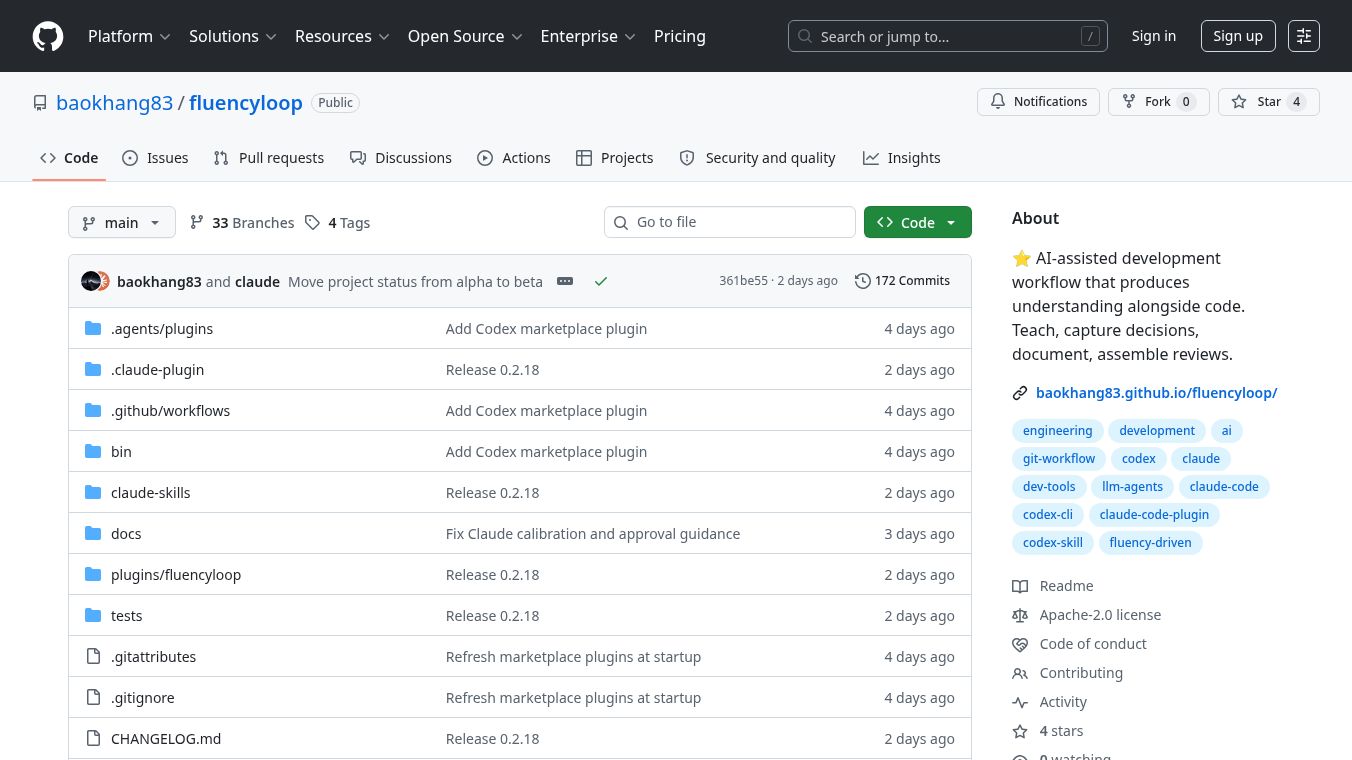





FluencyLoop: An AI-Assisted Development Workflow for Sustained Code Fluency
Research context and background
FluencyLoop is a tool designed to help developers keep up with the code that AI agents write for them. As artificial intelligence becomes more common in software development, there is a risk that humans will lose understanding of the code they do not write themselves. FluencyLoop solves this by ensuring that documentation, decision tracking, and knowledge transfer happen at the same time as the code is created. It acts as a bridge between AI-generated code and human understanding.
Benefits
FluencyLoop offers several key advantages for development teams:
- Living Constitution: It creates a set of engineering principles that guide every project. These principles grow over time as the team makes decisions, ensuring consistency across the codebase.
- Real-Time Knowledge Transfer: The tool teaches developers about important decisions exactly when they are made. It explains why a certain path was chosen and why other options were rejected. This keeps explanations relevant and easy to understand.
- Documentation That Follows the Code: Instead of writing documentation after the code is done, FluencyLoop generates it during the development process. This means the documentation is always up to date and based on actual changes.
- Decision Tracking: Every choice made during development is recorded with full reasoning. Reviewers can see the decisions that shaped a feature rather than just a list of changed files.
- Personalized Learning: The tool tracks what each developer knows and does not know. It adjusts the depth of explanations based on individual familiarity with the project, making learning more efficient.
Use Cases
FluencyLoop is useful in various scenarios within software development:
- Standard Features: Teams can use it to build regular features while ensuring that every decision is documented and understood by the team.
- Large-Scale Initiatives: For big projects, the tool helps break down complex work into smaller, manageable tasks. It designs the architecture and tracks progress across multiple features.
- Onboarding New Developers: New team members can learn about the codebase faster because decisions are explained as they are made. The personalized knowledge base helps them understand what is familiar and what needs more attention.
- Code Reviews: Reviewers get a clear picture of the rationale behind changes. This makes the review process more effective and focused on important decisions rather than just syntax or style.
- Maintaining AI-Generated Code: As AI agents write more code, FluencyLoop ensures that humans remain fluent in that code. It prevents the knowledge gap that often occurs when AI does the heavy lifting.
Pricing
FluencyLoop is currently available as a free plugin for Claude Code and Codex. There is no separate subscription or licensing fee mentioned in the available information. Users can install it directly through the marketplace of their respective AI coding assistants.
Vibes
While there are no formal public reviews or testimonials available in the provided information, the tool has been designed with user experience in mind. The workflow is structured to be non-intrusive, allowing developers to continue their normal work while gaining additional insights. The focus on teaching at the moment of decision-making suggests a user-friendly approach that integrates seamlessly into existing development practices.
Additional Information
FluencyLoop is developed by baokhang83 and is available on GitHub. The tool works with both Claude Code and Codex platforms. It requires basic command-line tools like git and either Bash or PowerShell depending on the operating system. The plugin handles its own updates automatically, checking for new versions at the start of each session. All project-specific documentation is stored in a dedicated folder within the repository, while personal learning profiles are kept locally on each developer's machine.
This content is either user submitted or generated using AI technology (including, but not limited to, Google Gemini API, Llama, Grok, and Mistral), based on automated research and analysis of public data sources from search engines like DuckDuckGo, Google Search, and SearXNG, and directly from the tool's own website and with minimal to no human editing/review. THEJO AI is not affiliated with or endorsed by the AI tools or services mentioned. This is provided for informational and reference purposes only, is not an endorsement or official advice, and may contain inaccuracies or biases. Please verify details with original sources.



Comments
Please log in to post a comment.