ComplyLayer





ComplyLayer: A Comprehensive Guide to AI Compliance and Governance
Introduction
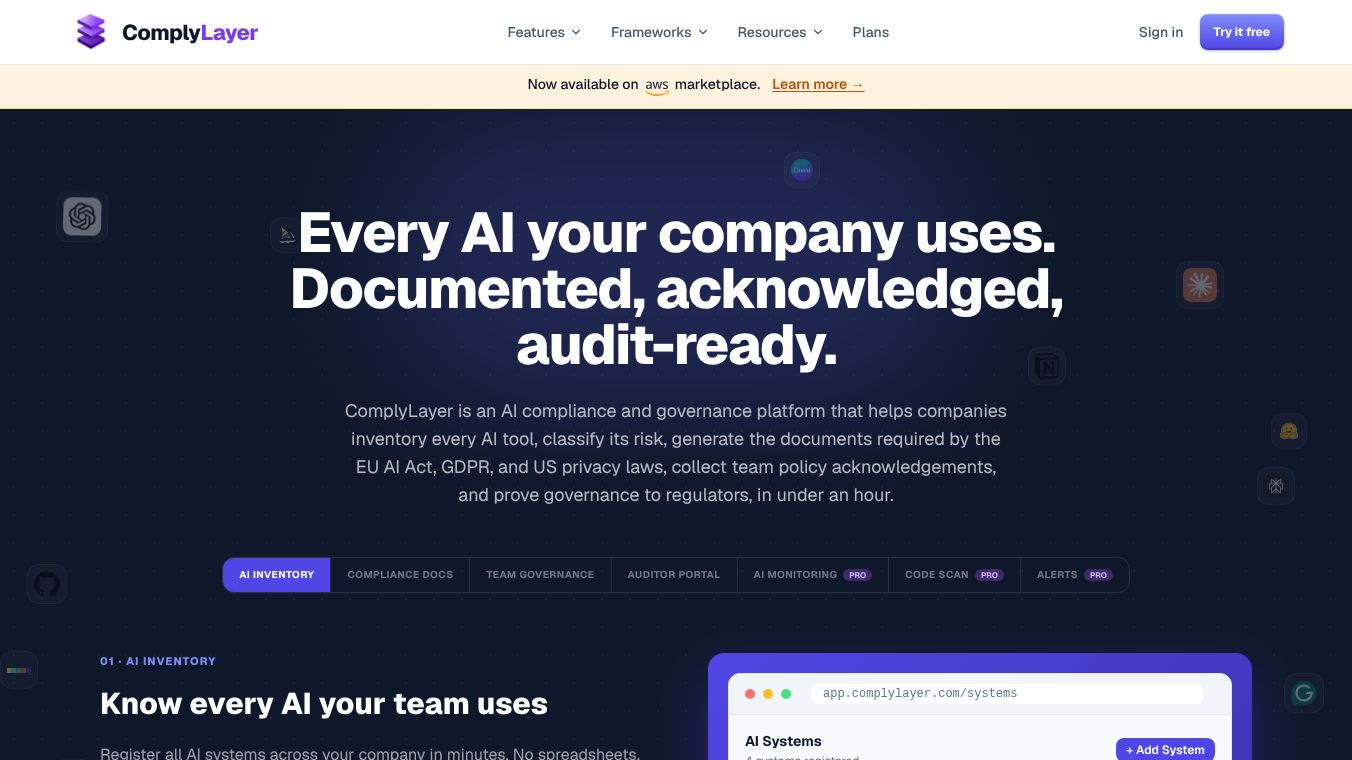
In an era where artificial intelligence is everywhere, regulators are watching closely and issuing more fines. ComplyLayer is a platform built to help companies manage the rules around AI. It allows organizations to list every AI tool they use, check how risky each one is, and create the paperwork needed for laws like the EU AI Act, GDPR, and US privacy rules. The goal is to let companies prove they are following the rules in under an hour.
Benefits
ComplyLayer offers several key advantages for businesses trying to navigate complex AI regulations.
- Centralized Control:Instead of using messy spreadsheets, companies can register all their AI systems in one place. This creates a single source of truth that is easy to audit.
- Fast Document Creation:The platform can generate personalized AI usage policies, technical documentation, and transparency notices in one click. These documents are ready for audits and come in seven languages to meet European requirements.
- Team Training:To meet new rules about AI literacy, the tool helps send policies to employees and collect signed confirmations. This creates a clear record that staff have been trained.
- Shadow AI Detection:Many teams use AI tools without telling their bosses. ComplyLayer automatically finds these hidden tools and warns the company if sensitive data is being shared with them.
- Audit Support:Regulators and external auditors can use a secure link to view compliance scores and documents. The company can revoke access at any time.
- Real-Time Alerts:The system sends warnings for policy violations or missing documents. It ranks these alerts by severity so teams can fix critical issues first.
Use Cases
ComplyLayer is designed for organizations that use artificial intelligence and need to stay compliant with various laws.
- Enterprise Customers:Large companies often require proof of AI governance before signing contracts. ComplyLayer provides the documentation needed to pass security reviews.
- Cyber Insurers:Insurance companies use AI risk controls to decide on policy premiums. This platform helps businesses show they have proper controls in place.
- Investors and Boards:When investors check a company, they want to see documented AI governance. ComplyLayer makes this due diligence process easier.
- Software Developers:By connecting to GitHub, the tool scans code dependencies to identify if a company is acting as an AI provider. This helps developers understand their legal obligations under the EU AI Act.
- Global Teams:Since the platform supports multiple languages and covers laws in over 47 US states and 10+ international requirements, it is useful for companies operating across different borders.
Pricing
ComplyLayer uses a tiered pricing model and offers a 14-day Pro trial that does not require a credit card.
- Starter:This plan costs $99 per month or $83 per month if billed annually. It includes features for inventory, documents, governance, and reports.
- Pro:This plan costs $149 per month or $125 per month if billed annually. It adds Risk Alerts and AI Monitoring to the Starter features.
- Enterprise:Pricing is custom for larger organizations. This tier includes all Pro features plus a dedicated API and custom frameworks.
The platform is also available on AWS Marketplace. This allows companies to pay for the service using their existing AWS budget on a single invoice.
Vibes
While specific customer testimonials are not detailed in the available information, the public reception highlights the urgency of the product. Regulators have already issued over 1.8 billion euros in fines for AI non-compliance, with some fines reaching 405 million euros. Companies like Luka Inc. and Serco have faced penalties for issues with chatbots and facial recognition. This environment has created a strong demand for tools that can quickly prove governance to regulators, security teams, and investors.
Additional Information
ComplyLayer has developed a clear system to distinguish between different roles in AI regulation. It automatically detects if an organization is a "Deployer" or a "Provider" for each AI system. A Deployer uses third-party tools like ChatGPT and has lighter obligations. A Provider trains or sells their own AI and needs full documentation. The platform covers major frameworks like the NIST AI Risk Management Framework, ISO 42001, and DORA. It also maps obligations for the EU AI Act, including Article 4 on AI literacy, which became mandatory for teams on February 2, 2025.
This content is either user submitted or generated using AI technology (including, but not limited to, Google Gemini API, Llama, Grok, and Mistral), based on automated research and analysis of public data sources from search engines like DuckDuckGo, Google Search, and SearXNG, and directly from the tool's own website and with minimal to no human editing/review. THEJO AI is not affiliated with or endorsed by the AI tools or services mentioned. This is provided for informational and reference purposes only, is not an endorsement or official advice, and may contain inaccuracies or biases. Please verify details with original sources.




Comments
Please log in to post a comment.