claude-real-video
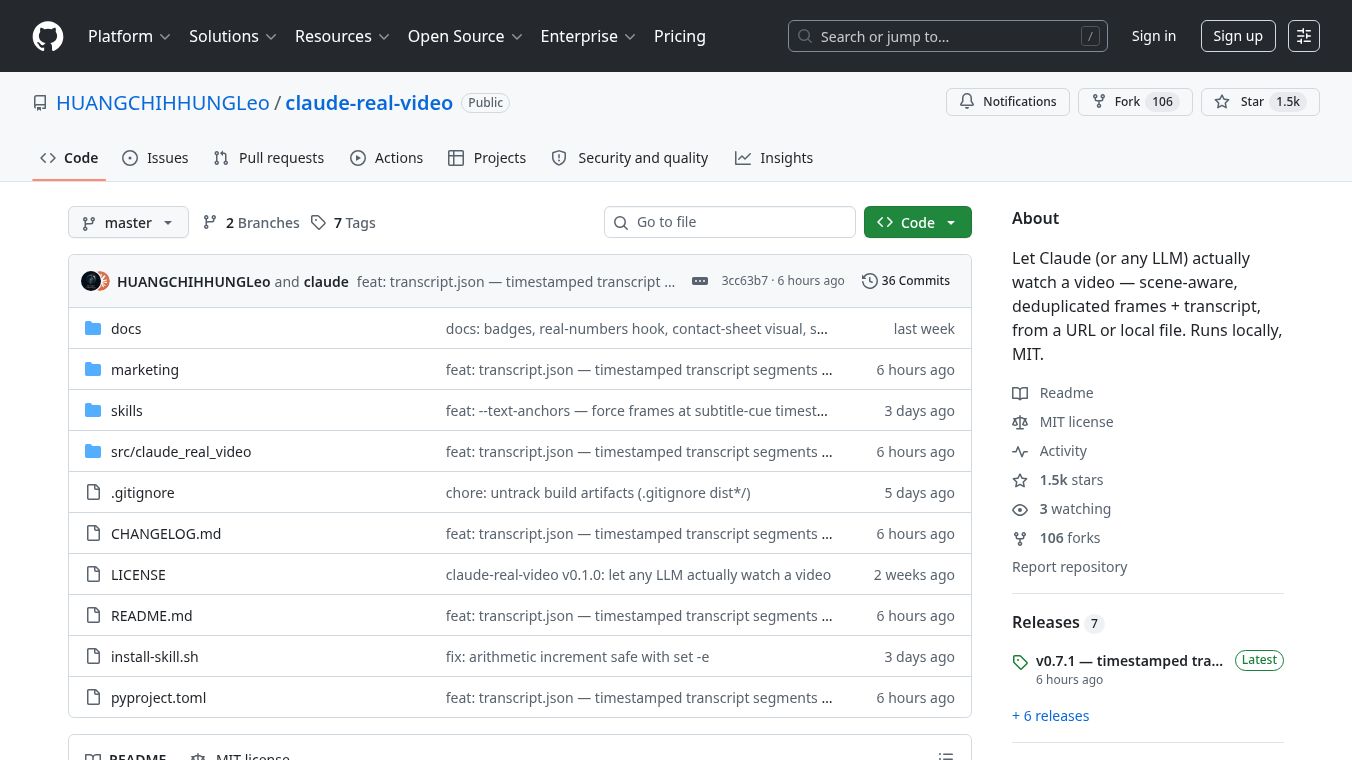





Let Claude (or Any LLM) Actually Watch a Video: A Comprehensive Guide toclaude-real-video
Introduction
Most AI tools do not truly see a video. When users paste a YouTube link into ChatGPT or similar models, the system typically reads only the transcript, ignoring the visual content. Even advanced models like Gemini, which can process video natively, often rely on fixed-interval frame sampling, causing fast cuts or subtle visual changes to be missed.claude-real-video(CRV) solves this by allowing any Large Language Model to actually watch a video. It processes videos locally, extracting only the frames that matter, and pairs them with audio transcripts. This approach reduces token usage while ensuring the AI understands the visual context, camera movements, and narrative flow.
Benefits
The tool offers several key advantages over traditional methods. It uses intelligent frame extraction to identify every scene change instead of relying on fixed intervals. This means it does not waste resources on static images or miss important fast cuts. The system employs a sliding-window deduplication algorithm to ensure each unique shot is sent only once, even if the video cuts back to a previous scene. This results in fewer, more meaningful frames, leading to cheaper context costs and better understanding. Additionally, all processing runs 100% on the user's machine, ensuring no video data is uploaded to a cloud server. This local processing guarantees full privacy and control over what is sent to an LLM.
Use Cases
claude-real-videois designed for anyone who wants to analyze video content deeply. It can be used for content consumption, educational analysis, or reverse-engineering video production techniques. Users can run the tool via a command line interface or use a web interface for a graphical experience. The tool supports various platforms including YouTube, Instagram, and TikTok. It is particularly useful for creators who want to understand how a video was shot, including camera moves and editing rhythm. Educators can use it to analyze lecture videos, while marketers can study competitor content. The tool also integrates well with knowledge bases, allowing users to save analysis notes for future reference.
Pricing
The core functionality of the tool is free and open-source under the MIT License. Users can install it using pip without any cost. For those who need advanced features,crv Prois available for a one-time founder price. This version adds deep analysis capabilities such as camera-move classification, editing rhythm analysis, and perception timelines. The free version focuses on extracting what is on screen, while the Pro version provides insights into how the video was produced.
Vibes
The project has received positive attention for its innovative approach to video analysis. Users appreciate the ability to truly understand video content rather than just reading transcripts. The local processing feature is highly valued for privacy-conscious users who do not want their data sent to the cloud. The tool's flexibility in supporting various video platforms and its integration with existing workflows have made it a popular choice among developers and content analysts. The open-source nature of the project encourages community contributions and transparency.
Additional Information
The project is open-source and available on GitHub. It requires Python 3.10 or higher and dependencies like ffmpeg and ffprobe for frame extraction and audio processing. The tool supports multiple operating systems including macOS, Windows, and Linux. The developers have created a comprehensive guide for installation and usage, making it accessible to both technical and non-technical users. The project emphasizes legal compliance, reminding users to only download content they have the right to access.
This content is either user submitted or generated using AI technology (including, but not limited to, Google Gemini API, Llama, Grok, and Mistral), based on automated research and analysis of public data sources from search engines like DuckDuckGo, Google Search, and SearXNG, and directly from the tool's own website and with minimal to no human editing/review. THEJO AI is not affiliated with or endorsed by the AI tools or services mentioned. This is provided for informational and reference purposes only, is not an endorsement or official advice, and may contain inaccuracies or biases. Please verify details with original sources.
Comments
Please log in to post a comment.