Claude Finance Risk Review Workflow
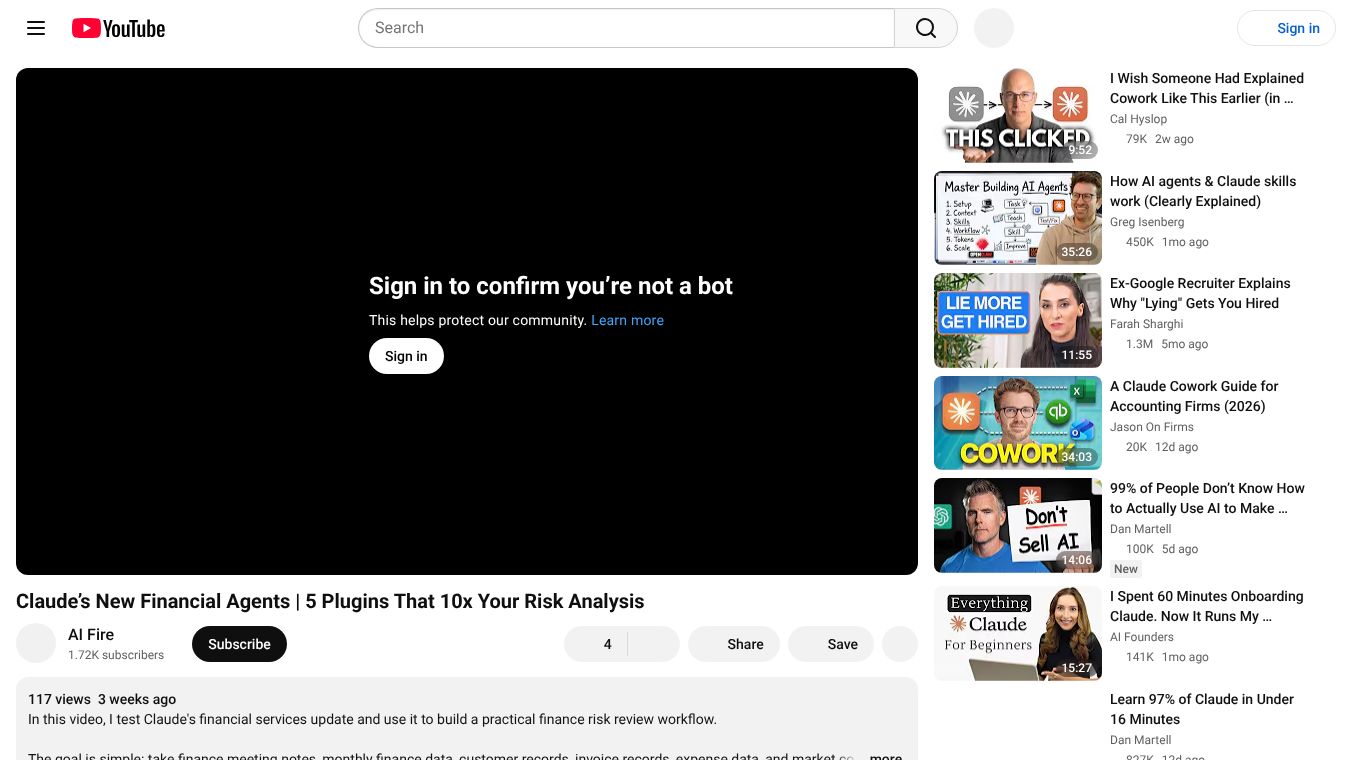





The Claude Finance Risk Review Workflow is a method that uses the AI tool Claude to help finance teams analyze and write reports about financial risks. Instead of replacing human experts, this workflow acts as a digital assistant that handles the heavy lifting of reading documents, finding patterns, and drafting clear explanations. This approach helps organizations meet strict rules while saving time on writing tasks.
Benefits
This workflow offers several major advantages for risk management teams. It significantly cuts down the time needed to write risk narratives, which often takes up to sixty percent of a senior analyst's day. By using Claude, teams can process large amounts of data from news reports, financial statements, and regulatory guidelines in minutes instead of days. The system helps identify control gaps in operational processes and ensures that all required sections for regulatory submissions are present. It also allows for faster stress testing by generating detailed explanations of how different economic scenarios might affect a company. Ultimately, this tool reduces the burden on analysts while improving the quality and speed of risk documentation.
Use Cases
Finance teams can apply this workflow in many different situations. One common use case is credit risk analysis, where the system reviews a company's financial health and drafts a credit memo for a new partner. Another application is regulatory reporting, such as preparing documents for rules like DORA or Basel IV, where the AI checks for compliance and drafts the necessary text. Risk officers can also use it to create scenario analysis for stress tests, helping them explain potential losses to regulators. Additionally, the workflow supports operational risk management by reviewing internal audit findings and updating risk registers to reflect recent events or near-miss incidents.
Pricing
Pricing details for the Claude Finance Risk Review Workflow are not available in the provided information. The workflow relies on the existing subscription plans for the Claude AI platform rather than a separate fee structure.
Vibes
Public reviews and specific testimonials regarding this exact workflow are not included in the source material. However, the article notes that across more than two hundred enterprise deployments, risk and treasury teams report that the bottleneck in their work is the human effort required to interpret data, not the models themselves. Users describe the system as a senior analyst that never sleeps, capable of drafting and researching at any hour. Teams report a reduction in narrative drafting time for stress test submissions by sixty-five to seventy-five percent. The quality of the narratives generated by the system consistently meets or exceeds the standards seen in prior regulatory feedback reviews.
Additional Information
The workflow is built on the capabilities of the Claude AI model, which features a large context window allowing it to read hundreds of pages of documents at once. It is designed to work alongside existing quantitative risk models rather than replace them. The system is familiar with major risk frameworks including COSO ERM, ISO 31000, Basel III and IV, DORA, and TCFD. Organizations can customize the system to follow specific regulatory requirements by setting the right instructions. The approach emphasizes that final credit decisions, regulatory sign-offs, and board-level attestations must always remain under the control of qualified human professionals.
This content is either user submitted or generated using AI technology (including, but not limited to, Google Gemini API, Llama, Grok, and Mistral), based on automated research and analysis of public data sources from search engines like DuckDuckGo, Google Search, and SearXNG, and directly from the tool's own website and with minimal to no human editing/review. THEJO AI is not affiliated with or endorsed by the AI tools or services mentioned. This is provided for informational and reference purposes only, is not an endorsement or official advice, and may contain inaccuracies or biases. Please verify details with original sources.

Comments
Please log in to post a comment.