Autonnel
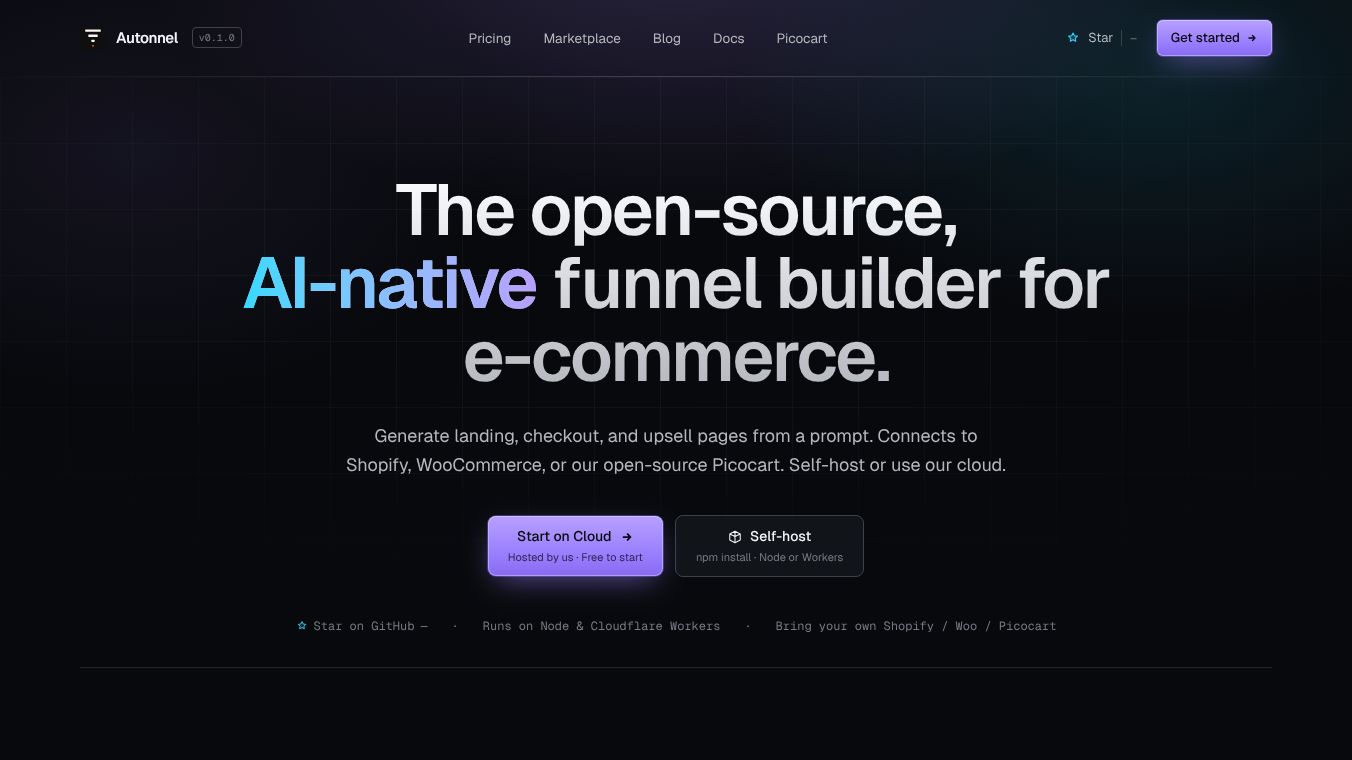





Autonnel: The Open-Source, AI-Native Funnel Builder for E-Commerce
Introduction
Autonnel is a new tool built for online stores. It is an open-source platform that uses artificial intelligence to help businesses create sales funnels. A sales funnel includes landing pages, checkout flows, and pages that offer extra products to customers. Instead of writing code or dragging and dropping blocks, users can simply type what they want in plain English. The AI then builds the actual web pages for them. Autonnel works with popular store systems like Shopify and WooCommerce, and it also has its own store platform called Picocart. Users can choose to run the software on their own servers or use the cloud services provided by Autonnel.
The tool is built on a modern technology stack that uses Node.js and Cloudflare Workers. This architecture makes it very cheap to run. Traditional hosting solutions often cost a lot of money even when no one is visiting the site. Autonnel allows applications to scale down to zero when traffic is low, which means businesses pay very little for hosting.
Benefits
Autonnel offers several key advantages for e-commerce teams. First, it features an AI agent that creates real web components based on user prompts. Users describe the outcome they want, and the agent builds the page, places elements on a canvas, and even generates images. Every change is tracked in a way that makes version control easy and clear.
Second, the platform includes an always-on AI analyst. This tool monitors funnel data and alerts the team when performance drops. It provides specific advice to fix problems. For example, it might suggest adding a PayPal button if checkout rates drop for European visitors. It can also spot issues with mobile performance or suggest ways to increase the average order value.
Third, Autonnel is designed to be very cost-effective. By using Cloudflare Workers, it can run on a free plan or a low-cost standard plan. This is a significant reduction compared to traditional self-hosting options that can cost around forty dollars a month for servers and databases. The tool also offers nine core features that are built-in and ready to use. These include generating ad images from prompts, adding one-click upsells to increase sales, managing customer abandonment sequences, and handling server-side tracking for ads on platforms like Meta and TikTok.
Use Cases
Autonnel is designed for e-commerce businesses of all sizes. It is ideal for teams that want to build landing pages and checkout flows quickly without needing deep coding skills. The prompt-to-page feature allows marketers to create new sales pages in minutes by simply describing the goal.
The conversion analysis agent is useful for teams that need to optimize their sales funnels. It helps identify why customers are leaving the checkout process or why upsell offers are not working. This is valuable for businesses that want to improve their revenue without spending more on ads.
The multi-site feature allows companies to bind unlimited domains to a single deployment. This is perfect for brands that run multiple storefronts and want to manage them all from one admin interface. The bring your own catalog feature makes it easy for stores to connect their existing product data from Shopify or WooCommerce. This means businesses can switch between e-commerce platforms without having to rewrite their entire codebase.
Pricing
Autonnel offers three distinct pricing tiers to fit different needs.
The Open Source tier is free forever. It is licensed under Apache-2.0 and includes all adapters. This option is best for teams that have their own DevOps capabilities and want full control over their infrastructure.
The Popular tier costs $29 per month plus 1% of the gross merchandise value. This managed cloud solution includes all marketplace templates and plugins. It also offers a free tier where users pay only when they make sales. This option is great for teams that want a hassle-free experience with priority support.
The Enterprise tier has custom pricing. It includes a flat monthly fee with no percentage of sales. This plan offers single sign-on, on-prem deployment options, and a dedicated solutions engineer. It is designed for large organizations that need high security and custom integrations.
Vibes
Autonnel represents a shift in how e-commerce infrastructure is built. By combining AI-driven page generation with edge-native performance, it empowers teams to build and optimize their funnels more efficiently. The open-source nature of the project allows for community contributions and transparency. Users appreciate the ability to self-host for zero licensing fees while still having access to powerful AI features. The platform has received attention for its innovative approach to reducing server costs and automating conversion analysis.
Additional Information
Autonnel is built on a modern architecture using Node.js and Cloudflare Workers. This choice of technology allows the platform to leverage the free tier of Cloudflare, which includes 100,000 requests per day. For higher traffic, the standard plan costs $5 per month for 10 million requests. This is an 8x cost reduction compared to traditional self-hosting on AWS.
The core primitives of the platform are composable and licensed under Apache-2.0. This means developers can inspect and use these components in their own projects. The platform includes an MCP server and Claude skills out of the box, allowing users to point any agent at their orders and funnels using scoped bearer keys. This integration with AI agents is a notable achievement that sets it apart from traditional funnel builders.
This content is either user submitted or generated using AI technology (including, but not limited to, Google Gemini API, Llama, Grok, and Mistral), based on automated research and analysis of public data sources from search engines like DuckDuckGo, Google Search, and SearXNG, and directly from the tool's own website and with minimal to no human editing/review. THEJO AI is not affiliated with or endorsed by the AI tools or services mentioned. This is provided for informational and reference purposes only, is not an endorsement or official advice, and may contain inaccuracies or biases. Please verify details with original sources.

 No Info

Comments
Please log in to post a comment.