AI Bug Triage Prompt





Research context and background
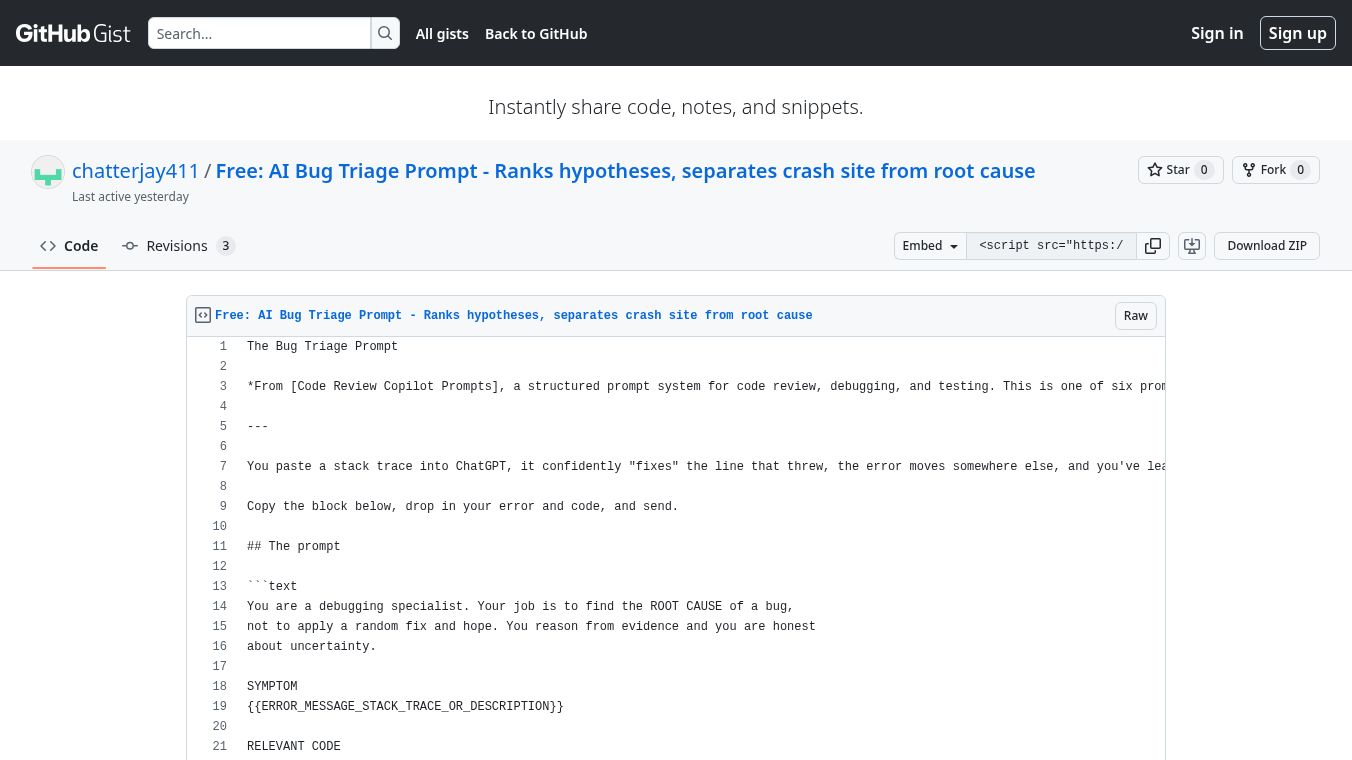
The AI Bug Triage Prompt is a text-based tool designed to help software teams manage and prioritize bug reports more efficiently. It is a specific set of instructions or a prompt that users can feed into an artificial intelligence model. The goal is to get the AI to analyze bug descriptions and suggest a priority level for each issue. This helps teams decide which problems to fix first without spending too much time on manual sorting.
Benefits
The main advantage of this tool is that it saves time. Software teams often receive dozens of bug reports every day. Reading and ranking each one manually can be slow and tiring. By using this prompt, the AI can quickly scan the reports and assign a priority level based on how severe the issue is. This allows human developers to focus their energy on the most critical problems first.
Another benefit is consistency. When humans sort bugs, their mood or fatigue levels might change throughout the day, leading to inconsistent decisions. An AI model applies the same rules to every report. This ensures that the team always follows a standard process for triage.
The tool also helps non-technical team members. Sometimes bug reports come from users who do not know how to describe technical problems clearly. The AI can interpret these vague descriptions and highlight the key issues, making it easier for developers to understand what needs to be fixed.
Use Cases
This prompt is useful for any software development team that uses bug tracking systems like Jira, GitHub Issues, or Linear. It is especially helpful for large teams where the volume of incoming reports is high. A team lead can use the AI to generate a daily summary of the top priority bugs before starting the day.
It can also be used during the initial setup of a new project. When a team is building a new product, they might not have established workflows yet. The AI can help create a temporary triage system until the team develops their own processes.
Freelancers and small teams can also benefit from this tool. Even with fewer bugs, a single critical issue can block progress. The AI can quickly identify if a reported bug is a showstopper or a minor cosmetic issue, helping the freelancer decide how to spend their time.
Pricing
There is no specific price for the AI Bug Triage Prompt itself. It is a piece of code or text that is shared publicly. Users can copy and paste it into their own AI accounts for free. However, users will need to pay for the AI service they use to run the prompt, such as OpenAI or another provider. The cost depends on how many times they run the prompt and how much text they send to the AI.
Vibes
The public reception of this prompt is generally positive among developers who share it on platforms like GitHub. Users appreciate that it is open source and free to use. Many comments highlight how much time it saves during busy sprints. Some users note that the AI sometimes makes mistakes if the bug description is very unclear, but they still find the tool helpful as a starting point. The community often shares tips on how to tweak the prompt to get better results for specific types of software.
Additional Information
The AI Bug Triage Prompt was created by a user known as chatterjay411. It was published on GitHub, a popular platform for sharing code and software tools. The prompt is part of a larger collection of AI prompts designed to improve software development workflows. There are no known corporate partnerships or major funding events associated with this specific prompt, as it is an individual contribution to the open-source community.
This content is either user submitted or generated using AI technology (including, but not limited to, Google Gemini API, Llama, Grok, and Mistral), based on automated research and analysis of public data sources from search engines like DuckDuckGo, Google Search, and SearXNG, and directly from the tool's own website and with minimal to no human editing/review. THEJO AI is not affiliated with or endorsed by the AI tools or services mentioned. This is provided for informational and reference purposes only, is not an endorsement or official advice, and may contain inaccuracies or biases. Please verify details with original sources.
 No Info
Comments
Please log in to post a comment.