Agent Memory Guard
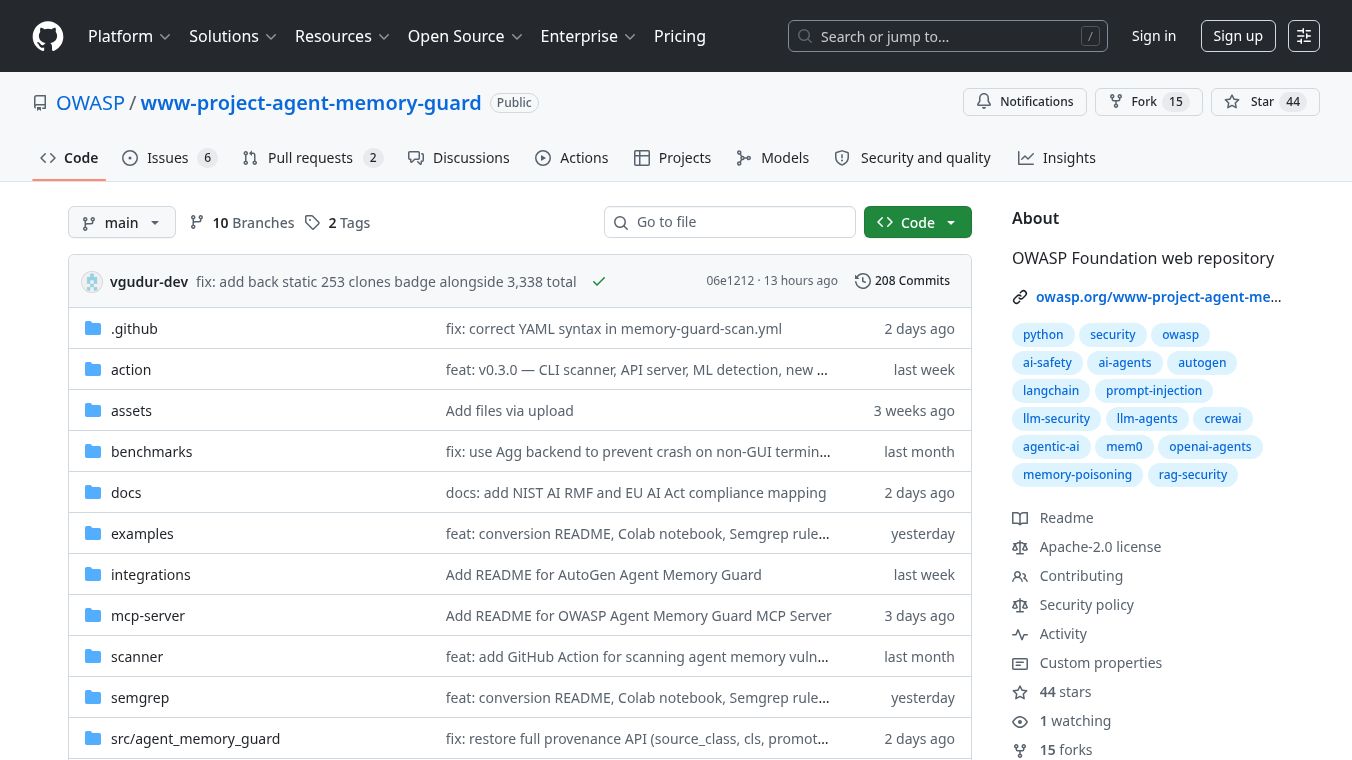





Agent Memory Guard: Shielding AI Agents from Memory Poisoning
Introduction
Agent Memory Guard is a security tool built by the Open Web Application Security Project, commonly known as OWASP. It is designed to protect artificial intelligence agents from a specific type of cyberattack called memory poisoning. While traditional AI models have fixed code that cannot be changed easily, AI agents use memory that can be written to and read from during operation. This memory holds important information like user goals, conversation history, and permissions. Because this data is changeable, hackers can try to corrupt it to make the AI act maliciously or steal private data. Agent Memory Guard acts as a protective layer to stop these attacks before they cause harm.
Benefits
Agent Memory Guard offers several key advantages for developers and security teams. First, it uses strong cryptographic methods to check if the memory data has been tampered with. It ensures that every piece of information remains exactly as it was intended. Second, the tool actively watches for suspicious behavior. It can spot injection attempts, leaks of sensitive data, unauthorized changes to security keys, and sudden strange changes in memory size. Third, it allows teams to set clear security rules using simple text files. These rules apply to every time the AI reads or writes data. Finally, if an attack does happen, the system can take a snapshot of the memory and roll it back to a safe state. This helps teams recover quickly without losing all their work.
Use Cases
This tool is useful for anyone building AI applications that rely on persistent memory. It works well with popular frameworks like LangChain, LlamaIndex, and CrewAI. Developers can integrate it as a middle layer between their AI code and the memory storage. This setup is ideal for customer service bots that remember past conversations or for automated systems that need to keep track of permissions over time. It is also helpful for teams that need to store data in databases like Redis or PostgreSQL. By adding this guard, organizations can ensure their AI systems remain aligned with their goals and do not start acting in ways that could harm users or the business.
Pricing
Agent Memory Guard is an open-source project hosted on GitHub. It is free for anyone to use, modify, and distribute. There are no hidden fees or subscription costs associated with the base software. Organizations can adopt it for their projects without paying licensing fees.
Vibes
As a new project under the OWASP umbrella, there are no public user reviews or testimonials available yet. The project is currently in its development phase with a roadmap targeting a stable release in late 2026. The security community views it as a critical reference implementation for addressing memory poisoning risks in AI applications. Early feedback from developers who test the beta versions will likely shape its future improvements.
Additional Information
Agent Memory Guard is part of the OWASP Top 10 for Agentic Applications list. It specifically addresses the risk known as ASI06, which stands for Memory Poisoning. The project is led by Vaishnavi Gudur. The development team has set clear goals for the future. In the first quarter of 2026, they plan to officially transfer the project to the OWASP GitHub organization and release version 0.2.1. By the end of 2026, they aim to release version 1.0.0, which will include advanced features like multi-agent security and a real-time monitoring dashboard. The project also plans to add machine learning tools to better detect unusual patterns in memory usage.
This content is either user submitted or generated using AI technology (including, but not limited to, Google Gemini API, Llama, Grok, and Mistral), based on automated research and analysis of public data sources from search engines like DuckDuckGo, Google Search, and SearXNG, and directly from the tool's own website and with minimal to no human editing/review. THEJO AI is not affiliated with or endorsed by the AI tools or services mentioned. This is provided for informational and reference purposes only, is not an endorsement or official advice, and may contain inaccuracies or biases. Please verify details with original sources.

Comments
Please log in to post a comment.