




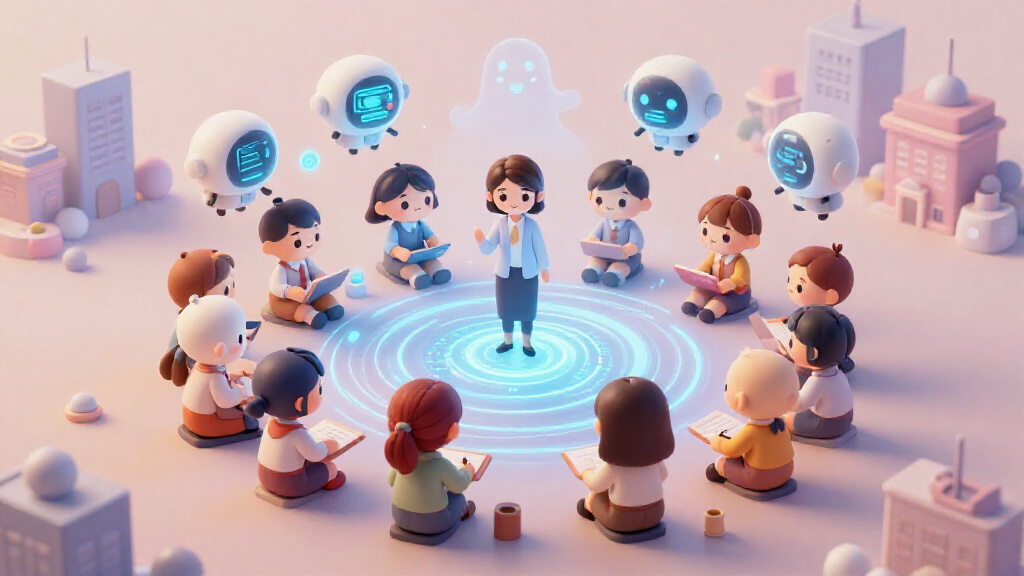
Pittsburgh-area schools are exploring ways to integrate AI into the classroom, with two local districts taking steps to incorporate AI and improve learning outcomes. However, concerns remain about the impact on teachers and students.
Meanwhile, a writer experimented with AI-generated writing, asking an AI to write a novel. The result was a 6,000-word novel written in minutes, sparking questions about the future of writing and whether AI can replace human authors.
As AI becomes more prevalent, there's a growing need to hold companies accountable for their AI agents. This could involve regulations or industry-wide agreements to encourage companies to design and deploy safe and secure AI agents.
OpenAI's ChatGPT has introduced a new feature called Computer History, which allows users to show their AI agents how they work, enabling more natural and contextual conversations. This development aims to make AI agents more personalized and adaptable to individual work styles.
Healthcare companies are utilizing AI to drive innovation and improve patient care, analyzing medical data, developing new treatments, and streamlining clinical workflows. AI has the potential to improve health outcomes and transform the industry.
Educational institutions are also adapting to the AI economy. NorthWest Arkansas Community College and the Massachusetts Institute of Technology are collaborating on an AI curriculum to prepare students for jobs in the AI economy.
A study found that nearly half of tech companies are not complying with California's AI detection law, highlighting the need for greater transparency in AI use. Additionally, an expert warns that AI will impact entry-level white-collar jobs, with approximately 420 million jobs potentially affected globally by 2028.
Lastly, researchers have identified a phenomenon called catastrophic remembering in agentic coding, where AI systems remember and build upon previous instructions, leading to increased complexity.
Key Takeaways
• Pittsburgh-area schools are integrating AI to improve learning outcomes, while balancing the human element in education. • A writer used AI to write a 6,000-word novel in minutes, raising questions about AI's role in writing. • Companies may be held liable for their AI agents' actions, encouraging safe and secure AI design. • OpenAI's ChatGPT introduced Computer History, enabling more natural and contextual conversations. • Healthcare companies use AI to analyze data, develop treatments, and streamline workflows. • NorthWest Arkansas Community College and MIT collaborate on an AI curriculum. • Many tech companies are not complying with California's AI detection law. • AI may impact 420 million jobs globally by 2028. • Researchers identified catastrophic remembering in agentic coding, where AI systems build upon previous instructions. • Chester County, Pennsylvania, won a national award for AI-powered self-service kiosks.Pittsburgh-area Schools Adapt to AI in the Classroom
Pittsburgh-area schools are exploring ways to integrate AI into the classroom. Two local districts are taking steps to incorporate AI, but it's unclear what this means for the future of education. The goal is to use AI to improve learning outcomes, but there are also concerns about the impact on teachers and students. The districts are working to find a balance between using AI and maintaining the human element in education.
I Asked AI to Write a Novel, and It Wasn't So Bad
A writer asked AI to write a novel to see if it could produce a good book. The AI wrote a novel in minutes, but it was only 6,000 words long. The writer was surprised by the result, saying it wasn't so bad. The experiment raises questions about the future of writing and whether AI can replace human authors.
Making Companies Liable for AI Agents
As AI agents become more prevalent, there's a growing need to hold companies accountable for their actions. One way to do this is to make companies liable for the actions of their AI agents. This could involve regulations or industry-wide agreements. The goal is to encourage companies to design and deploy AI agents that are safe and secure.
Chester County Wins National Award for AI-Powered Kiosks
Chester County, Pennsylvania, has won a national award for its AI-powered self-service kiosks. The kiosks provide interactive wayfinding, court forms, and payment platforms to improve the visitor experience. The county launched the initiative to make court operations more efficient and provide easily accessible services in multiple languages.
OpenAI's ChatGPT Gains Context with Computer History Feature
OpenAI's ChatGPT has introduced a new feature called Computer History, which allows users to show their AI agents how they work. This enables more natural and contextual conversations. The feature aims to make AI agents more personalized and adaptable to individual work styles.
Healthcare Companies Utilize AI to Innovate
Healthcare companies are using AI to drive innovation and improve patient care. AI is being used to analyze medical data, develop new treatments, and streamline clinical workflows. The use of AI in healthcare has the potential to revolutionize the industry and improve health outcomes.
NWACC and MIT Collaborate on AI Curriculum
NorthWest Arkansas Community College and the Massachusetts Institute of Technology are collaborating on an AI curriculum. The goal is to develop a program that will prepare students for jobs in the AI economy. The partnership aims to provide students with practical, industry-relevant AI skills.
Study Finds Many Tech Companies Not Complying with AI Detection Law
A study found that nearly half of tech companies are not complying with California's AI detection law. The law requires companies to disclose the use of AI in their products and services. The study highlights the need for greater transparency in the use of AI.
AI to Impact Entry-Level Jobs
An expert warns that AI will have a significant impact on entry-level white-collar jobs. Approximately 420 million jobs could be affected globally by 2028. The expert emphasizes the need for workers to develop new skills to adapt to the changing job market.
The Phenomenon of Catastrophic Remembering in Agentic Coding
Researchers have identified a phenomenon called catastrophic remembering in agentic coding. This occurs when AI systems remember and build upon previous instructions, leading to an increase in complexity. The study explores the implications of this phenomenon for the design of coding systems.
Sources
- How Pittsburgh-area schools are trying to adapt to AI in the classroom
- I asked AI to write a novel. It’s not so bad.
- Making companies liable could rein in runaway AI
- Chester County’s AI-Powered Self-Service Kiosk Project Wins National Award
- OpenAI's ChatGPT Gains Context with Computer History Feature
- Healthcare companies utilize AI to innovate
- NWACC, MIT program collaborate on artificial intelligence curriculum
- Study finds nearly half of tech companies not complying with California’s AI detection law — Transparency Coalition. Legislation for Transparency in AI Now.
- AI to Massively Impact Entry-Level Jobs, Says Expert
- Why Does CLAUDE.md Keep Growing? Catastrophic Remembering in Agentic Coding
Comments
Please log in to post a comment.