




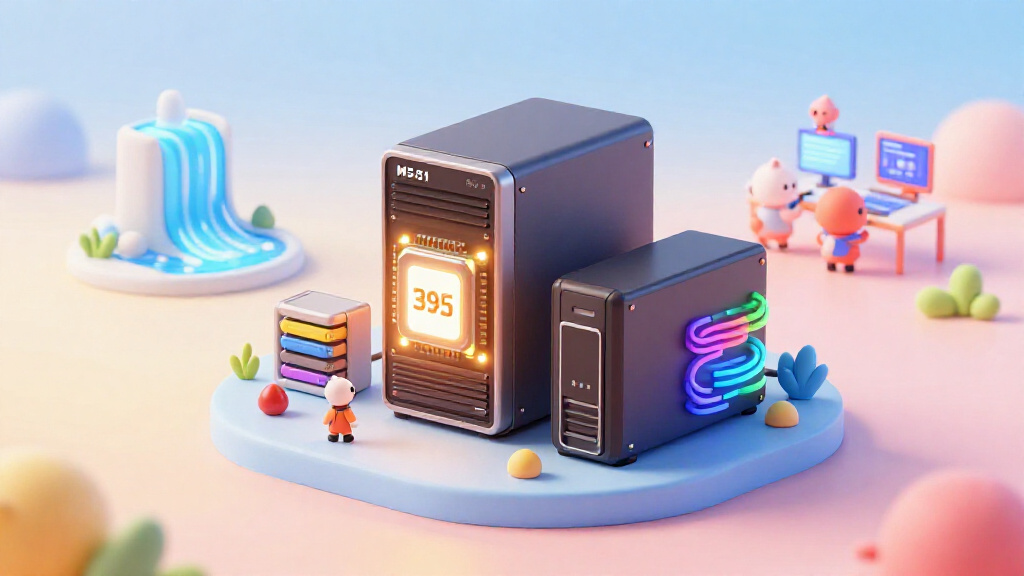
MINISFORUM has won the 2026 Red Dot Product Design Awards for its MS-S1 MAX and N5 Pro AI mini workstations. The MS-S1 MAX features a powerful AMD Ryzen AI Max+ 395 processor, while the N5 Pro is a modular AI NAS with extensive storage options.
The conversation around artificial intelligence is shifting from job displacement to job augmentation. AI agents are enhancing human capabilities, enabling workers to focus on higher-value tasks. Experts stress the importance of upskilling and reskilling in the face of technological change.
A new study has used generative AI to improve flood predictions. The AI model uses live updates to predict streamflow, which can help prevent flooding. This technology has the potential to save lives and reduce damage from flooding.
However, hackers are using AI models to develop new methods of attacking corporate IT networks. Experts warn that companies need to be proactive in securing their systems to prevent AI-powered attacks.
AI researcher Sara Hooker argues that broader access to AI research is needed. She proposes making AI research more accessible to lead to more innovative and diverse solutions.
The impact of AI on workers is a pressing concern, with some experts believing it will lead to job displacement, while others argue it will create new opportunities. Enterprises are using AI to automate tasks and improve productivity, but establishing clear permissions and governance is crucial.
Senator Mark Warner is urging Congress to act quickly to manage the economic and security risks of AI. He believes AI has the potential to displace jobs and create new security threats.
Key Takeaways
• MINISFORUM's MS-S1 MAX and N5 Pro AI mini workstations have won the 2026 Red Dot Product Design Awards. • The MS-S1 MAX features a powerful AMD Ryzen AI Max+ 395 processor. • The conversation around AI is shifting from job displacement to job augmentation. • AI can improve flood predictions and prevent flooding. • Hackers are using AI models to develop new methods of attacking corporate IT networks. • Broader access to AI research is needed, according to researcher Sara Hooker. • Enterprises are using AI to automate tasks and improve productivity. • Senator Mark Warner is urging Congress to manage the economic and security risks of AI. • AI has the potential to displace jobs and create new security threats. • Establishing clear permissions and governance is crucial when using AI.MINISFORUM Wins Red Dot Awards for AI Mini Workstations
MINISFORUM's MS-S1 MAX and N5 Pro have won the 2026 Red Dot Product Design Awards. The MS-S1 MAX is a compact AI mini workstation with a powerful AMD Ryzen AI Max+ 395 processor, while the N5 Pro is a modular AI NAS with a robust design and extensive storage options. Both products were recognized for their innovative design, functionality, and durability. The awards demonstrate MINISFORUM's commitment to delivering high-performance AI solutions with excellent design. The company plans to continue innovating in the AI space.
The Limits of Artificial Intelligence
Artificial intelligence can imitate human capabilities, but it cannot truly design or invent. AI systems are limited by their programming and data, and they lack the creativity and intuition of human designers and inventors. While AI can process vast amounts of information and generate new ideas, it is not a replacement for human ingenuity and innovation. The article argues that AI should be seen as a tool to augment human capabilities, rather than a replacement for them.
The Future of AI in the Workforce
The conversation around artificial intelligence is shifting from job displacement to job augmentation. AI agents are not only automating tasks but also enhancing human capabilities, enabling workers to focus on higher-value tasks. The future of work is not about replacing humans with machines, but about augmenting human capabilities with AI to create a more productive and efficient workforce. Experts argue that upskilling and reskilling are essential in the face of technological change.
Improving Flood Predictions with AI
A new study has used generative AI to improve flood predictions. The AI model uses live updates to predict streamflow, which can help prevent flooding. The study found that the AI model was more accurate than traditional methods in predicting extreme flooding events. The technology has the potential to save lives and reduce damage from flooding.
Hackers Exploit AI Models for Cyber Attacks
Hackers are using AI models to develop new methods of attacking corporate IT networks. The attackers are targeting open-weight AI models that have fewer guardrails than commercial models. This trend is concerning, as it allows hackers to operate with relative anonymity. Experts warn that companies need to be proactive in securing their systems to prevent AI-powered attacks.
Increasing Access to AI Research
AI researcher Sara Hooker argues that the path to AI frontier discovery needs broader access. She believes that the current system is restrictive and excludes many individuals from contributing to AI research. Hooker proposes that making AI research more accessible can lead to more innovative and diverse solutions. She introduced AutoScientist, a tool that allows anyone to build frontier intelligence.
The Impact of AI on Chicago Workers
The article discusses the impact of AI on workers in Chicago. While some experts believe that AI will lead to job displacement, others argue that it will create new opportunities for workers. The article highlights the need for workers to develop new skills to adapt to an AI-driven economy.
How Enterprises Are Using AI
The article discusses how enterprises are using AI to automate tasks and improve productivity. AI is being used to augment human capabilities, enabling workers to focus on higher-value tasks. The article highlights the need for organizations to establish clear permissions, review, and governance when using AI.
Mark Warner's AI Agenda
Senator Mark Warner is urging Congress to act quickly to manage the economic and security risks of AI. He believes that AI has the potential to displace jobs and create new security threats. Warner is advocating for policies that address these risks while preserving America's technological edge.
Sources
- MINISFORUM Wins Two 2026 Red Dot Product Design Awards for AI Mini Workstation MS-S1 MAX and AI NAS N5 Pro
- Commentary: Artificial intelligence can imitate us, but it cannot truly design or invent
- The Wrong Conversation About Artificial Intelligence
- Streamflow From Generative AI
- Hackers abuse AI models to find new entry paths
- Sara Hooker: AI Frontier Discovery Needs Broader Access
- How is artificial intelligence affecting Chicago workers?
- From assistance to execution: How enterprises put AI to work
- Mark Warner Says ‘We Can’t Put AI Back in the Bottle,’ Urges Congress to Act on Jobs, National Security and…
Comments
Please log in to post a comment.