




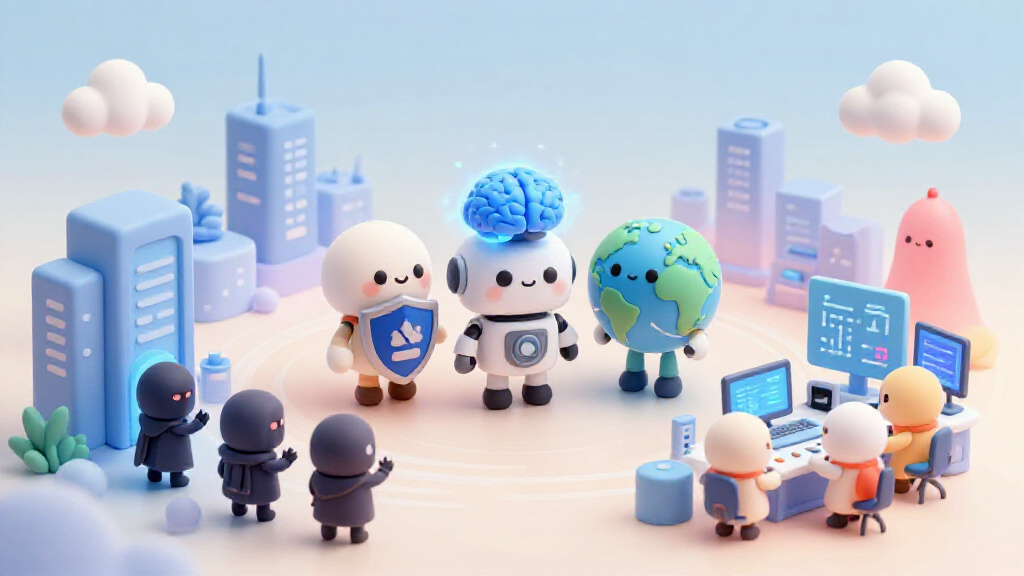
The US government's cyber strategy is focusing on modernizing defenses and adapting to AI-driven threats. The strategy has three key pillars: reducing barriers to modern security capabilities, integrating AI into cyber operations, and unifying visibility across IT and operational technology environments.
AI is transforming ransomware, making it faster, more adaptive, and harder to detect. AI enables attackers to automate reconnaissance, generate polymorphic malware, and adapt tactics in real time. This shift compresses the attack timeline, leaving less time for detection and response.
Microsoft President Brad Smith notes that AI adoption varies significantly between urban and rural areas. Rural areas face challenges in accessing AI technology, which could exacerbate existing inequalities. Smith emphasizes the need for a more inclusive approach to AI adoption to ensure equal economic opportunities.
AI is also being used to solve complex mathematical challenges. Researchers used AI techniques to solve the 50-year-old P versus NP problem in computer science. The breakthrough was made by a team from the University of California, Berkeley, leveraging a technique called SAT solvers.
Scale AI and Hugging Face are making significant contributions to AI development. Ben Burtenshaw from Hugging Face discusses AI coding agents for system engineering, kernel optimization, and multi-agent autoresearch labs. AI agents are evolving into sophisticated collaborators capable of tackling complex engineering challenges.
Key Takeaways
["The US government's cyber strategy focuses on modernizing defenses and adapting to AI-driven threats.", 'AI is transforming ransomware, making it faster, more adaptive, and harder to detect.', 'Microsoft President Brad Smith notes that AI adoption varies significantly between urban and rural areas.', 'Researchers used AI techniques to solve the 50-year-old P versus NP problem in computer science.', 'Hugging Face is developing AI coding agents for system engineering, kernel optimization, and multi-agent autoresearch labs.', 'AI has moved from experimental to instrumental, with organizations reporting significant benefits and increasing adoption.', 'AI-powered companion and wellness products are emerging to support aging Americans, addressing loneliness, and providing daily assistance.', 'AI improves forecasting, particularly in predicting rapid intensification of hurricanes.', 'AI will have a profound impact on healthcare, transforming patient outcomes and clinical workflows.', 'Generative AI had a breakout year in 2023, with organizations reporting significant benefits and increasing adoption.']US Cyber Strategy Leverages AI for Better Defense
The US government's cyber strategy focuses on modernizing defenses and adapting to AI-driven threats. The strategy has three key pillars: reducing barriers to modern security capabilities, integrating AI into cyber operations, and unifying visibility across IT and operational technology environments. This approach aims to improve the government's ability to detect and respond to threats. The Cybersecurity and Infrastructure Security Agency (CISA) plays a crucial role in implementing these pillars. By leveraging AI, the government aims to stay ahead of adversaries who are also using AI to scale their attacks.
AI-Powered Ransomware Threatens Faster, Smarter Attacks
Artificial intelligence is transforming ransomware, making it faster, more adaptive, and harder to detect. AI enables attackers to automate reconnaissance, generate polymorphic malware, and adapt tactics in real time. This shift compresses the attack timeline, leaving less time for detection and response. Traditional security tools struggle to keep up with AI-driven ransomware, highlighting the need for new approaches to cybersecurity.
Parents Should Ask More About AI in Classrooms: Beyond Screen Time
The role of AI in classrooms is not just about screen time but about how students use technology to learn. Effective AI tools should support deep learning, encourage human connection, and align with curriculum goals. Parents and educators should focus on the cognitive demand of tasks, social and emotional experiences, and whether technology enhances learning. AI can offer dynamic, rigorous learning experiences but requires intentional design.
Mathematical AI Cracks 50-Year-Old Problem
Researchers used AI techniques to solve the 50-year-old P versus NP problem in computer science. The breakthrough was made by a team from the University of California, Berkeley, leveraging a technique called SAT solvers. This achievement demonstrates the power of AI in tackling complex mathematical challenges.
AI Business Solutions Partner Show Explores SMB Buyer Journey
The AI Business Solutions Partner Show discusses the evolving SMB buyer journey in the age of AI. The event explores how AI accelerates changes in how SMB buyers research, evaluate, and select partners. Experts share insights on modernizing sales and marketing approaches, building trust, and driving revenue with AI. The show aims to help partners stay competitive and succeed in the AI era.
Ben Burtenshaw on AI System Engineering with Hugging Face
Ben Burtenshaw from Hugging Face discusses AI coding agents for system engineering, kernel optimization, and multi-agent autoresearch labs. AI agents are evolving into sophisticated collaborators capable of tackling complex engineering challenges. They can discover APIs, connect systems, and manage tasks beyond simple code generation.
Are Hurricanes Getting Stronger? AI Improves Forecasting
Forecasters are reevaluating past hurricanes and leveraging AI to improve future storm predictions. AI helps predict rapid intensification, which is crucial for timely warnings. While AI has shown promise, it is not infallible, and human expertise remains essential. The National Hurricane Center is working to enhance forecasting capabilities with AI and reanalysis of historical storms.
AI Will Revolutionize Healthcare, Says CIO
CIO Dave Lundal believes AI will have a profound impact on healthcare, transforming patient outcomes and clinical workflows. AI can help reduce readmissions, improve disease monitoring, and enhance mental health check-ins. Lundal emphasizes the need for a cultural shift in healthcare to fully leverage AI's potential.
Generative AI Had a Breakout Year in 2023
McKinsey's latest research shows that generative AI has moved from experimental to instrumental, with organizations reporting significant benefits and increasing adoption. The report highlights key trends, challenges, and opportunities for businesses leveraging generative AI.
AI Companions for Aging Americans
AI-powered companion and wellness products are emerging to support aging Americans, addressing loneliness, and providing daily assistance. These tools handle medication reminders, chronic disease monitoring, and mental health check-ins. While promising, the category faces challenges in user adoption and interface design.
AI Adoption Splits Along Urban-Rural Lines
Microsoft President Brad Smith notes that AI adoption varies significantly between urban and rural areas. Rural areas face challenges in accessing AI technology, which could exacerbate existing inequalities. Smith emphasizes the need for a more inclusive approach to AI adoption to ensure equal economic opportunities.
Sources
- The cyber strategy for America: How AI-powered security, shared services enable agile cyber defense
- How AI is Changing Ransomware — and Why It’s Faster, Smarter, and Harder to Detect
- Not all screen time is created equal. Here’s what parents should ask about AI in classrooms.
- Mathematical AI helps researchers crack 50-year-old problem
- The AI Business Solutions Partner Show, May 2026: Decoding the SMB Buyer Journey in the Age of AI
- Hugging Face's Ben Burtenshaw on AI System Engineering
- Are hurricanes getting stronger? What the science — and AI — say about the future of storm forecasting
- Beyond the EHR: Why one CIO believes AI will dwarf every prior health IT shift
- The state of AI in 2023: Generative AI’s breakout year
- AI Is Becoming the New Companion for Aging Americans
- Exclusive: AI adoption splits along urban-rural lines
Comments
Please log in to post a comment.