




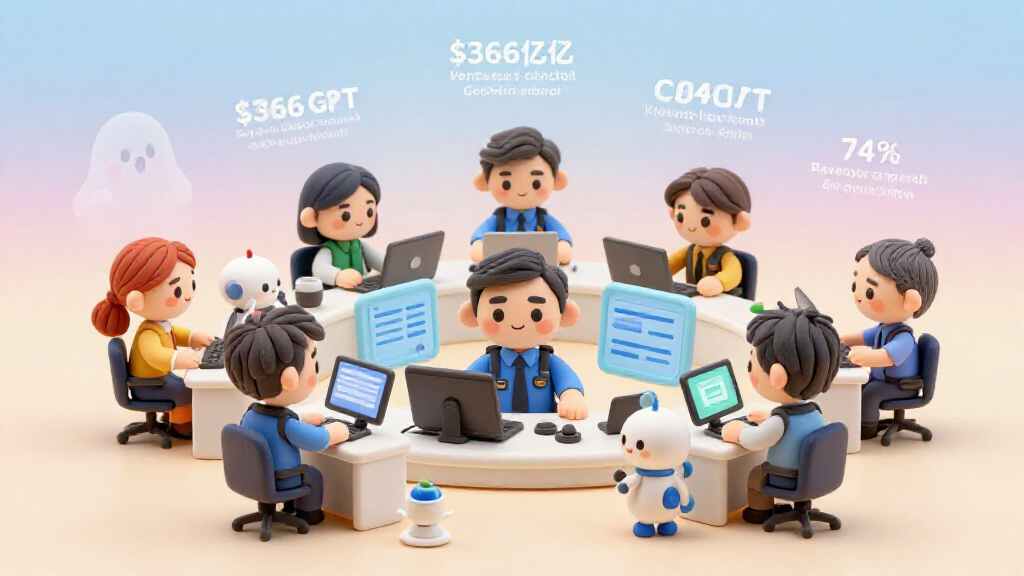
Security teams are facing increasing challenges in managing AI-related risks, with employees using AI tools like ChatGPT, Copilot, and Claude to work more efficiently, but potentially exposing sensitive company data. A risk-first approach is recommended, involving treating AI as a business risk and addressing the most critical threats first.
Former Google engineer Linwei Ding was convicted of stealing AI trade secrets from Google, highlighting the risks of IP theft in the AI sector. The use of AI by terrorists to plot attacks is also a growing concern, with a Detroit man charged with using AI to plan a Halloween attack on LGBTQ+ clubs.
California's AI dominance has fueled a $366 billion venture capital bonanza, with investors flocking to the state's AI startups and companies. The AI boom is driving growth in the tech industry, with companies like Hua Medicine reporting a 74% revenue growth driven by AI-driven R&D.
Security teams must prioritize AI risks and develop strategies to mitigate them, including understanding data movement around AI and implementing controls to prevent sensitive data from being used or shared inappropriately. Effective communication between security teams and boards is also crucial to ensure AI investments are aligned with business objectives.
Key Takeaways
* Employees' use of AI tools like ChatGPT, Copilot, and Claude poses data leakage risks for enterprises. * A former Google engineer was convicted of stealing AI trade secrets from Google. * California's AI dominance has fueled a $366 billion venture capital bonanza. * Security teams must prioritize AI risks and develop strategies to mitigate them. * Effective communication between security teams and boards is crucial to ensure AI investments are aligned with business objectives. * The use of AI by terrorists to plot attacks is a growing concern. * Hua Medicine reported a 74% revenue growth driven by AI-driven R&D. * Value Partners launched an AI and life sciences venture fund to invest in AI-enabled medical technologies. * A webinar will be held on August 25 to discuss governing AI agents at scale. * The Unified Data Security Report highlights the growing gap between data protection and the increasing use of GenAI.CISOs Must Prioritize AI Risks to Protect Business
Chief Information Security Officers (CISOs) must take a risk-first approach to manage AI threats. AI is a double-edged sword, providing both opportunities for cyber defenders and attackers. Attackers are using AI to make phishing more convincing, automate reconnaissance, and exploit vulnerabilities faster. Meanwhile, CISOs are challenged to secure everything at once, which is impossible. A risk-first approach involves treating AI as a business risk and addressing the most critical threats first. CISOs must understand where AI is being used across the business and identify which AI agents are capable of taking autonomous actions.
Employees' AI Use Poses Data Leakage Risk
The increasing use of AI tools by employees is creating a significant data leakage risk for enterprises. Employees are using AI tools like ChatGPT, Copilot, and Claude to draft, code, research, and respond faster, but this is exposing sensitive company data. The main concern is not that employees are trying to misuse AI, but that they are using it exactly as intended, which can lead to accidental data exposure. Enterprises need to understand data movement around AI and implement controls to prevent sensitive data from being used or shared inappropriately.
The Rise of Shady AI: A New Security Concern
Shady AI refers to the use of approved AI tools in unapproved, unexpected, or poorly governed ways. This is a growing concern for security teams, as it can lead to security risks, financial costs, and organizational drag. The proliferation of approved AI tools, broad permissions by default, and evolving usage patterns are driving the rise of shady AI. Security teams need to understand the risks associated with shady AI and develop strategies to mitigate them.
Former Google Engineer Convicted of Stealing AI Secrets
A former Google engineer, Linwei Ding, has been convicted of stealing AI trade secrets from Google. The judge overturned seven economic espionage convictions, but upheld seven trade-secret theft convictions. Ding was accused of stealing thousands of pages of confidential information related to Google's AI data centers. He is scheduled to be sentenced on September 1.
Ex-Google Engineer's Conviction for Stealing AI Secrets Partially Overturned
A federal judge has partially overturned the conviction of former Google engineer Linwei Ding, who was found guilty of stealing AI trade secrets. The judge ruled that there was insufficient evidence to convict Ding of economic espionage, but upheld the guilty verdict on theft of trade secrets. Ding is scheduled to be sentenced on September 1.
Unified Data Security Report Highlights AI-Era Data Protection Gap
The Unified Data Security Report 2026 highlights the growing gap between data protection and the increasing use of GenAI. The report reveals that 75% of organizations are struggling to keep pace with the rapid advancements in AI, and 60% are concerned about the security risks associated with GenAI. The report provides actionable insights and recommendations for organizations to close the data protection gap and ensure the safe and responsible use of GenAI.
Security Teams Know More About AI Than Boards Think
Security teams have a better understanding of AI risks and benefits than their boards, which can lead to a disconnect in decision-making. Security leaders need to communicate effectively with their boards to ensure that AI investments are aligned with business objectives. The solution involves defining clear ROI metrics, integrating AI tools with existing infrastructure, implementing identity security for AI, and investing in the human layer that makes AI work.
Webinar: Governing AI Agents at Scale
A webinar will be held on August 25 to discuss how Fortune 500 security teams are governing AI agents. The webinar will cover real-world enterprise scenarios and frameworks for governing AI agents at scale. The speakers include Moinul Khan, CEO & Co-Founder of Aurascape, and Vairavan Subramanian, VP of Product Management, Aurascape.
Terrorist Used AI to Plot Halloween Attack
A Detroit man, Ayob Nasser, has been charged with conspiracy to provide material support to ISIS and other terrorism-related charges. Prosecutors allege that Nasser used AI to plot a Halloween attack on LGBTQ+ clubs. The case highlights the growing concern of terrorists using AI to plan and execute attacks.
Prediction Markets Eye AI IPOs and Mars Missions
Prediction markets are offering insights into future events, including AI IPOs and Mars missions. Kalshi Markets, a regulated exchange for prediction markets, is seeing robust trading volume across a diverse range of future events. The markets are tracking the likelihood of various outcomes, including AI-related events and space exploration.
Hua Medicine Sees 74% Revenue Growth
Hua Medicine reported a 74% increase in revenue for the first half of 2026, driven by strong sales and AI-driven R&D. The company's commercialization efforts and stable pricing have contributed to the growth. Hua Medicine is focused on developing AI-enabled medical technologies.
Value Partners Launches AI and Life Sciences Venture Fund
Value Partners Group has partnered with Insilico Medicine and Pudong Development Group to create a joint AI and life sciences corporate venture capital fund. The fund will invest in AI-enabled medical technologies, focusing on areas such as AI-enabled drug discovery, biologics, and longevity technology.
California's AI Dominance Fuels $366 Billion Venture Capital Bonanza
California has attracted a record $366 billion in venture capital funding this year, driven by the AI boom. The state's concentration of AI workers, companies, and investors has made it an attractive destination for investors. The $366 billion in funding is more than three times the amount invested in the other 49 states combined.
Sources
- AI threats are everywhere. A risk-first CISO decides what to prioritize
- AI Security Risk Is a Data Problem, and Employees Are at the Center of It
- Why "Shady AI" is Security's Next Big Governance Problem
- Former Google Engineer Convicted of Stealing AI Trade Secrets Gets Major Legal Break as Judge Throws Out…
- Ex-Google engineer's conviction for stealing AI secrets partially overturned
- Unified Data Security Report 2026 - Closing the AI-Era Data Protection Gap
- What your security team knows about AI that your board doesn’t
- Webinar: How Fortune 500 Security Teams Are Governing AI Agents
- Dearborn terrorist wannabe used AI to plot Halloween attack, feds say
- Kalshi Markets Eye AI IPOs, Mars Missions
- Hua Medicine: Revenue up 74% with strong sales, patent extension, and AI-driven R&D fueling future growth
- California’s AI Dominance Fuels $366 Billion Venture Capital Bonanza
- Value Partners creates joint AI and life sciences corporate VC fund with Insilico Medicine and Pudong
Comments
Please log in to post a comment.