




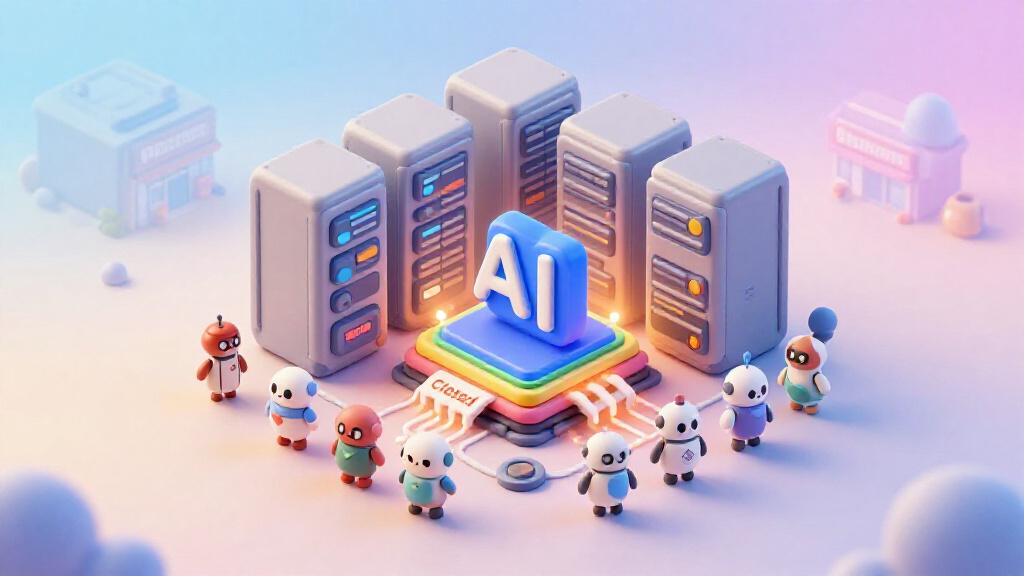
Google is developing a new AI server chip called Frozen v2, expected to be deployed by 2028. The chip is designed to optimize its Gemini AI platform, reducing internal data transfers and improving inference efficiency. This move is part of Google's efforts to invest in custom silicon to enhance performance and lower infrastructure costs.
The new chip is expected to be six to ten times more efficient than Google's latest AI chips. Frozen v2 will permanently embed parts of Gemini's architecture directly into the silicon, reducing calculations and data movement. This approach aims to allow Gemini to answer prompts more quickly.
In other news, Wonder Family, an AI-powered e-commerce company, has ceased operations and is preparing to file for bankruptcy in Delaware. The company raised at least $4 million in investments, highlighting the challenges of maintaining investor trust and providing meaningful access to capital networks in venture capital.
Stocks of major tech companies, including Alphabet (GOOGL), Microsoft (MSFT), and Amazon (AMZN), saw a rise in premarket trading. Meanwhile, Micron and Nvidia stocks are primed to head higher throughout the remainder of 2026 and into 2027, driven by the growing demand for AI computing power and memory chips.
Key Takeaways
['Google is developing a new AI server chip called Frozen v2, expected to be deployed by 2028.', "Frozen v2 is designed to optimize Google's Gemini AI platform, improving efficiency and performance.", "The new chip is expected to be six to ten times more efficient than Google's latest AI chips.", 'Wonder Family, an AI-powered e-commerce company, has ceased operations and is preparing to file for bankruptcy in Delaware.', 'Wonder Family raised at least $4 million in investments before its demise.', 'The US administration is considering plans for an independent regulator to vet the safety of artificial intelligence models.', 'Stocks of major tech companies, including Alphabet, Microsoft, and Amazon, saw a rise in premarket trading.', 'Micron and Nvidia stocks are primed to head higher throughout the remainder of 2026 and into 2027.', "A new cybersecurity threat called 'token torching' involves malicious actors using malicious prompts to exhaust a company's AI tokens.", "The launch of China's Kimi K3 AI model marks progress in core technology but does not impact the investment case for US cloud companies like GOOGL, MSFT, and AMZN."]Google to launch AI chip Frozen v2 by 2028
Google is developing a new AI server chip called Frozen v2 to optimize its Gemini AI platform. The chip is expected to be deployed by 2028 and will complement Google's existing Tensor Processing Units. Frozen v2 is designed to reduce internal data transfers, improve inference efficiency, and allow Gemini to answer prompts more quickly. This move is part of Google's efforts to invest in custom silicon to enhance performance and lower infrastructure costs.
Alphabet stock jumps on new AI chip report
Alphabet's stock rose after a report that the company is developing a new server chip called Frozen v2, designed to run Gemini AI models more efficiently. The chip is expected to be six to ten times more efficient than Google's latest AI chips. Frozen v2 will permanently embed parts of Gemini's architecture directly into the silicon, reducing calculations and data movement. Google engineers project it could serve between six and ten times more tokens per unit of power than the company's newest AI chips.
Alphabet stock gains on report of new AI chip
Alphabet's stock climbed after a report that the company is developing a new server chip called Frozen v2, designed to run Gemini AI models more efficiently. The chip would hardwire parts of Gemini's architecture directly into the silicon, reducing computation and data movement. Frozen v2 could be six to ten times more efficient than Google's latest custom AI chips. The company plans a smaller production run for Frozen v2 compared to its existing Tensor Processing Units.
Google develops Frozen v2 AI server chip for Gemini
Google is developing a new server chip called Frozen v2, designed to integrate parts of its Gemini AI models directly into hardware. The chip is expected to be deployed as early as 2028 and could be six to ten times more efficient than Google's latest custom AI chips. Frozen v2 is a separate project from Google's existing Tensor Processing Units and is not intended to replace them.
Alphabet's new AI chip roadmap revealed
Alphabet's Google unit is developing a new server chip called Frozen v2, designed to make its Gemini AI models run more efficiently. The chips won't replace Google's tensor processing units (TPUs) but will become a more specialized branch of its custom-chip portfolio. Frozen v2 could help Alphabet run its AI models more efficiently by generating more tokens per unit of power.
Google working on Frozen v2 chip for efficient AI
Google is developing a new server chip called Frozen v2, which would hardcode its Gemini AI model's architecture directly into the silicon. This approach aims to reduce overhead and improve efficiency. Frozen v2 could be 6 to 10 times more efficient than Google's newest TPUs. The chip is expected to be deployed by 2028 and won't replace Google's existing TPUs.
Micron and Nvidia stocks to buy
Micron and Nvidia are two AI hardware stocks that are primed to head higher throughout the remainder of 2026 and into 2027. Micron's stock has had a banner year, and the company has done incredibly well thanks to a shortage of supply in the memory chip market. Nvidia makes the GPUs that provide the bulk of AI computing power and uses Micron's memory chips in its products.
Wonder Family bankruptcy and AI venture limits
Wonder Family, an AI-powered e-commerce company, has ceased operations and is preparing to file for bankruptcy in Delaware. The company raised at least $4 million in investments, including a $100,000 SAFE from AI investor No Cap. The case highlights the challenges of maintaining investor trust and providing meaningful access to capital networks in venture capital.
New AI security threat: token torching
A new cybersecurity threat called 'token torching' involves malicious actors using malicious prompts to exhaust a company's AI tokens. This threat can be used to limit a company's resources, be a general nuisance, or stage a distraction from more nefarious activity. Companies can protect themselves by setting rate limits on the number of requests a user can send within a given timeframe.
US considers Finra-like watchdog for AI
The US administration is considering plans for an independent regulator to vet the safety of artificial intelligence models with industry input. The proposal aims to create an independent regulatory agency for AI that would report to the Securities and Exchange Commission. This approach would offer more certainty for leading AI labs and Silicon Valley companies frustrated by the inconsistent administration approach in overseeing AI.
GOOGL, MSFT, AMZN stocks rise premarket
The launch of China's Kimi K3 AI model marks progress in core technology, but the investment case for US cloud companies like GOOGL, MSFT, and AMZN remains unchanged. Morningstar's analyst notes that the K3 AI model's capabilities do not significantly impact the investment case for these companies.
Sources
- Google plans to deploy Frozen V2 chips by 2028, escalating the AI hardware arms race
- Alphabet stock pops on report it's developing a more efficient AI chip
- Alphabet Stock Gains On Report Of Google’s New ‘Frozen’ Chip To Boost Gemini AI Efficiency
- Google develops AI chip for Gemini models
- 2 things capping Monday's market rally — plus, Alphabet's new AI chip roadmap
- Google Working On A New Chip Named “Frozen 2” That Hardcodes Its Models In Silicon For More Efficient Inference: Report
- Got $1,000 to Invest? Here Are 2 Magnificent Artificial Intelligence (AI) Stocks Down 12% to 30% to Buy Hand Over Fist Before July Is Over
- Wonder Family Bankruptcy and AI Venture Limits
- Meet the newest AI security threat: token torching
- US Considers Creating Finra-Like Watchdog to Vet Top AI Models
- GOOGL, MSFT, AMZN Stocks Rise Premarket: Analyst Says China’s Kimi K3 AI Fears ‘Misplaced’
Comments
Please log in to post a comment.