




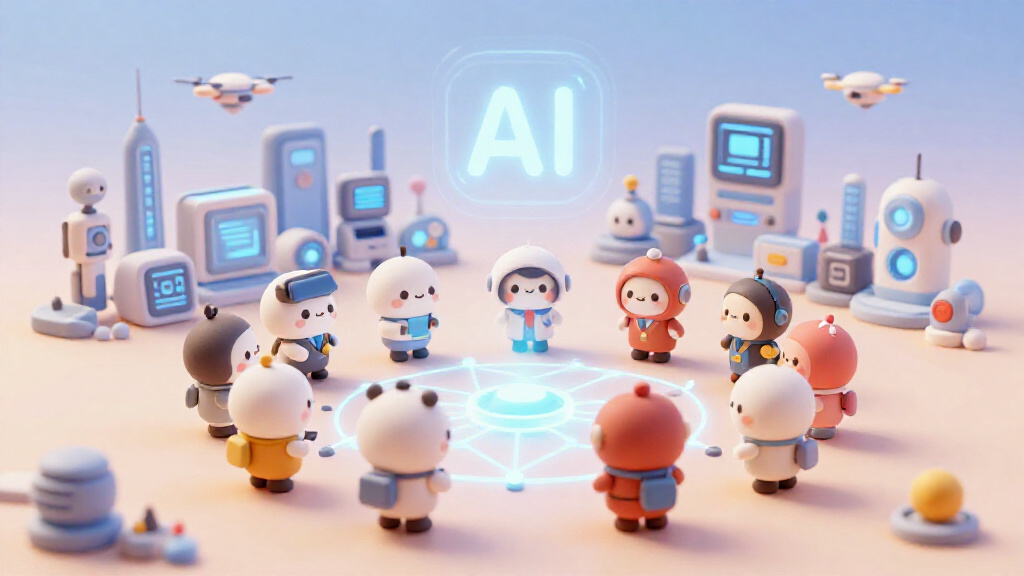
The AI job landscape is transforming, with tech workers adapting to changes brought about by artificial intelligence. While AI has increased productivity in many industries, it has also led to job losses in others. Experts emphasize the need for workers to learn new skills and be adaptable to the future of work.
The AI market continues to grow, with the global AI Robots Market projected to reach $33.39 billion by 2030, up from $6.11 billion in 2025. This growth is driven by increasing adoption of automation and intelligent systems across industries.
Major players in the AI space, including Stability AI, OpenAI, and Anthropic, are making significant strides. China's AI models are rapidly catching up to and even surpassing their US counterparts in some key metrics, posing a new challenge to American tech giants.
AI is being used to build innovative tools and technologies. For example, entrepreneur Luke Peters used AI to build GovKodo, an AI-powered web software that simplifies local government permitting. Samsung Electronics is also preparing to introduce new AI innovations, including neural processing units and AI-specific chipsets.
The AI Workforce Consortium is working to help the global workforce thrive through research, scalable frameworks, and access to curated learning resources. The Consortium's latest research focuses on cybersecurity, which is one of the fastest-growing areas of the technology workforce.
Key Takeaways
• The global AI Robots Market is projected to grow from $6.11 billion in 2025 to $33.39 billion by 2030.• China's AI models are rapidly catching up to and even surpassing their US counterparts in some key metrics.
• AI is transforming the job landscape, with tech workers adapting to changes brought about by artificial intelligence.
• The AI Workforce Consortium is working to help the global workforce thrive through research, scalable frameworks, and access to curated learning resources.
• Major players in the AI space include Stability AI, OpenAI, and Anthropic.
• AI is being used to build innovative tools and technologies, such as GovKodo and Samsung's AI-specific chipsets.
• The AI Workforce Consortium's latest research focuses on cybersecurity, one of the fastest-growing areas of the technology workforce.
• Experts emphasize the need for workers to learn new skills and be adaptable to the future of work.
• AI has increased productivity in many industries but has also led to job losses in others.
• Samsung Electronics is hosting a 'Galaxy Event August 2026' to introduce new AI innovations.
Tech Workers Adapt to AI-Transformed Job Landscape
The rapid advancement of artificial intelligence is transforming the job landscape, and tech workers are adapting to the changes. AI is changing the way people work and the types of jobs that exist. While AI has increased productivity in many industries, it has also led to job losses in others. Experts emphasize the need for workers to learn new skills and be adaptable to the future of work.
What is AI? Experts Weigh In
Artificial intelligence, or AI, refers to computer programs that can learn and improve on their own. AI has the potential to revolutionize industries, but it also raises concerns about job displacement and the need for workers to adapt to new technologies. Experts discuss the benefits and challenges of AI and its impact on the job market.
AI Accelerates Identity Crisis in C-Suites and Teenagers
The emergence of AI highlights a profound human crisis: a widespread identity crisis. The 'conviction crisis' reveals that 87% of managers suppress individuality at work, fostering disengagement and significant economic costs. This self-editing, termed the 'editing crisis,' starts in adolescence and has a high cost to pay, especially now. Leaders must prioritize authentic authorship and cultivate safe disagreement.
Harvard's Elizabeth Sherwood-Randall on AI-Enabled Biology
Elizabeth Sherwood-Randall, a senior fellow at Harvard Belfer Center, discusses the future of AI-enabled biology, the rise of bioweapon threats, and more.
AI Workforce Consortium Addresses Cybersecurity Workforce
The AI Workforce Consortium, founded in 2024, aims to help the global workforce thrive through research, scalable frameworks, and access to curated learning resources. The Consortium's latest research focuses on cybersecurity, which is one of the fastest-growing areas of the technology workforce.
AI Robots Market to Reach $33.39 Billion by 2030
The global AI Robots Market is projected to grow from $6.11 billion in 2025 to $33.39 billion by 2030, at a CAGR of 40.4%. The market is driven by increasing adoption of automation and intelligent systems across industries.
Debates over AI Consciousness Are a Trap
The current debate over AI consciousness is a trap that distracts from the real issue: companies that build AI systems should be held accountable for the harms they cause. The conversation about 'robot rights' and AI personhood is a carefully crafted fiction that protects corporate interests at the cost of human lives.
AI Agent Research Advances
Recent developments in AI agent research highlight significant progress in operational stability, runtime efficiency, and the exploration of self-improving agent architectures. These developments are addressing fundamental challenges in deploying and scaling AI agents.
Founders Use AI to Build Tools
Entrepreneur Luke Peters used AI to build GovKodo, an AI-powered web software that simplifies local government permitting. AI has democratized development and enabled Peters to build and iterate quickly.
Samsung Preps Galaxy S26 AI Innovations
Samsung Electronics is hosting a 'Galaxy Event August 2026' to introduce new AI innovations. The event will showcase advanced AI features, including neural processing units and AI-specific chipsets.
China's AI Models Challenge US Dominance
China's AI models are rapidly catching up to and even surpassing their US counterparts in some key metrics. This development poses a new challenge to American tech giants like OpenAI and Anthropic.
Sources
- Tech workers continuing to adapt to AI-transformed job landscape
- What is AI? Here's what people had to say
- AI Is Accelerating The Same Identity Crisis In C-Suites And Teenagers
- AI & bioweapons: Harvard's Elizabeth Sherwood-Randall on navigating the AI-biotech era
- AI Workforce Consortium: Building a cybersecurity workforce ready for what's next
- Artificial Intelligence (AI) Robots Market to Reach USD 33.39 Billion by 2030, Growing at 40.4% CAGR, Says MarketsandMarkets™
- Debates over AI consciousness are a trap
- AI Agent Research Advances: Operational Fixes and Self-Improvement
- With AI, Founders Are Building The Tools They Always Wished They Had
- Samsung Preps Galaxy S26 AI Innovations Event
- China's AI Models Challenge US Dominance
Comments
Please log in to post a comment.