




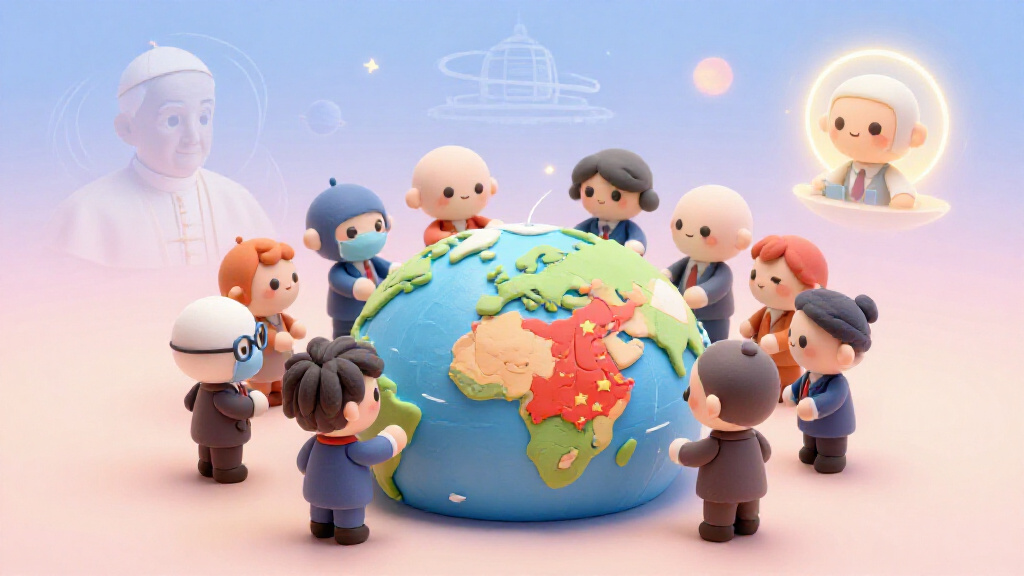
China is tightening travel restrictions for AI experts from private firms, requiring them to get approval before traveling abroad. This move aims to protect China's AI technology and talent from being used by other countries.
The Pope has warned tech giants about the risks of AI and algorithms, emphasizing the need for public oversight and human dignity in technology. He issued an encyclical, 'Magnificent Humanity,' addressing AI risks and calling for stronger government regulation.
Meanwhile, companies are adapting to the AI era. Olly is updating its product pages to better serve AI-driven searches, adding FAQs and clearer descriptions. DeepSeek is running multiple AI races simultaneously, aiming to develop highly capable AI models.
There are also concerns about the challenges facing orbital data centers in space, which are not yet ready for national security use. Additionally, there is a debate on whether governments can effectively regulate AI, with some arguing that it's too late.
On the other hand, AI is accelerating the discovery of next-generation energy materials, with researchers using AI to predict material properties and optimize battery and catalyst design. However, consumer AI startups face a trust fatigue problem, with users questioning AI-generated answers and credibility.
Reflection AI, a leading open-source AI company, is establishing a lobbying and policy communications operation in Washington, D.C. to develop U.S. open-source models for national security.
Key Takeaways
• China requires AI experts from private firms to get approval before traveling abroad to protect its AI technology and talent. • Pope Leo XIV warns tech giants about AI risks and calls for public oversight and human dignity in technology. • Olly updates product pages to serve AI-driven searches. • DeepSeek runs multiple AI races to develop capable AI models. • Orbital data centers face technical and business challenges. • Debate on whether governments can effectively regulate AI. • AI accelerates next-generation energy material discovery. • Consumer AI startups face trust fatigue. • Reflection AI establishes lobbying operation in Washington, D.C.China tightens travel rules for AI experts
China now requires AI experts from private firms to get approval before traveling abroad. This move aims to protect China's AI technology and talent from being used by other countries. The policy is an expansion of a former government directive that required some AI engineers to report their travel plans. The goal is to keep top AI professionals in China and prevent the leaking of key technologies.
China limits AI talent travel
China is expanding travel restrictions to include top AI talent. This move aims to strengthen domestic AI capabilities amid global competition. The restrictions signal China's intent to retain valuable AI minds within its borders.
China restricts AI experts' travel
China is imposing new travel restrictions on top AI talent. This move may impact the global AI industry and research. The restrictions aim to control key technologies and prevent intellectual property leaks.
Pope Leo XIV warns tech giants
Pope Leo XIV warned Silicon Valley about the risks of AI and algorithms. He emphasized the need for public oversight and human dignity in technology. The Pope wants to ensure technology serves the common good.
Pope Leo warns of AI dangers
Pope Leo issued an encyclical, 'Magnificent Humanity,' addressing AI risks. He warned against AI reducing people to data and eliminating jobs. The Pope called for stronger government regulation of AI.
Olly updates product pages for AI era
Olly is updating its product pages to better serve AI-driven searches. The brand is adding FAQs and clearer descriptions to help customers find products through AI chatbots.
Orbital data centers not ready for defense
Orbital data centers in space are being developed, but they are not yet ready for national security use. Despite investments, these data centers still face technical and business challenges.
Can governments regulate AI effectively?
There is a debate on whether governments can effectively regulate AI. Pope Leo XIV has warned about AI risks and called for regulation. A poll asks readers if it's too late for governments to regulate AI.
Data privacy and AI progress
Regulators must loosen data sharing restrictions to improve AI performance. AI systems need diverse and well-curated datasets to learn effectively. Current data protection laws may hinder AI progress.
Consumer AI faces trust fatigue
Consumer AI startups face a trust fatigue problem. Users are questioning AI-generated answers and the credibility of AI systems. Startups must handle ambiguity, verification, and accountability.
AI accelerates energy material discovery
AI is accelerating the discovery of next-generation energy materials. Researchers are using AI to predict material properties and optimize battery and catalyst design.
DeepSeek runs multiple AI races
DeepSeek is running multiple AI races simultaneously. The company aims to develop highly capable AI models. DeepSeek's V4 model was recently released, but it received a muted reaction.
Reflection AI arrives in Washington
Reflection AI, a leading open-source AI company, is establishing a lobbying and policy communications operation in Washington, D.C. The company aims to develop U.S. open-source models for national security.
Sources
- Chinese AI experts in private firms now required to secure approval before international travel — Beijing enforces policy to secure top-tier talent, expands measures beyond government
- China's AI Talent Drawbridge Up: Travel Curbs Tighten
- China Restricts AI Talent Travel
- Pope Leo XIV Warns Silicon Valley Against Controlling Humanity Through AI And Algorithms
- Pope Leo warns of dangers tied to artificial intelligence
- How Olly is updating its product detail pages for the AI era
- Despite ‘peak hype,’ orbital data centers for AI not yet ready for NatSec prime time
- VOTE: Is it too late for governments to effectively regulate AI?
- Data Privacy and AI Progress
- Startups Building Consumer AI Are Now Facing a Trust Fatigue Problem - KoreaTechDesk | Korean Startup and Technology News
- From algorithms to atoms: How artificial intelligence is accelerating the discovery of next-generation energy materials
- DeepSeek Is Now Running Three AI Races at Once
- AI & Tech Brief: Reflection AI arrives in Washington
Comments
Please log in to post a comment.